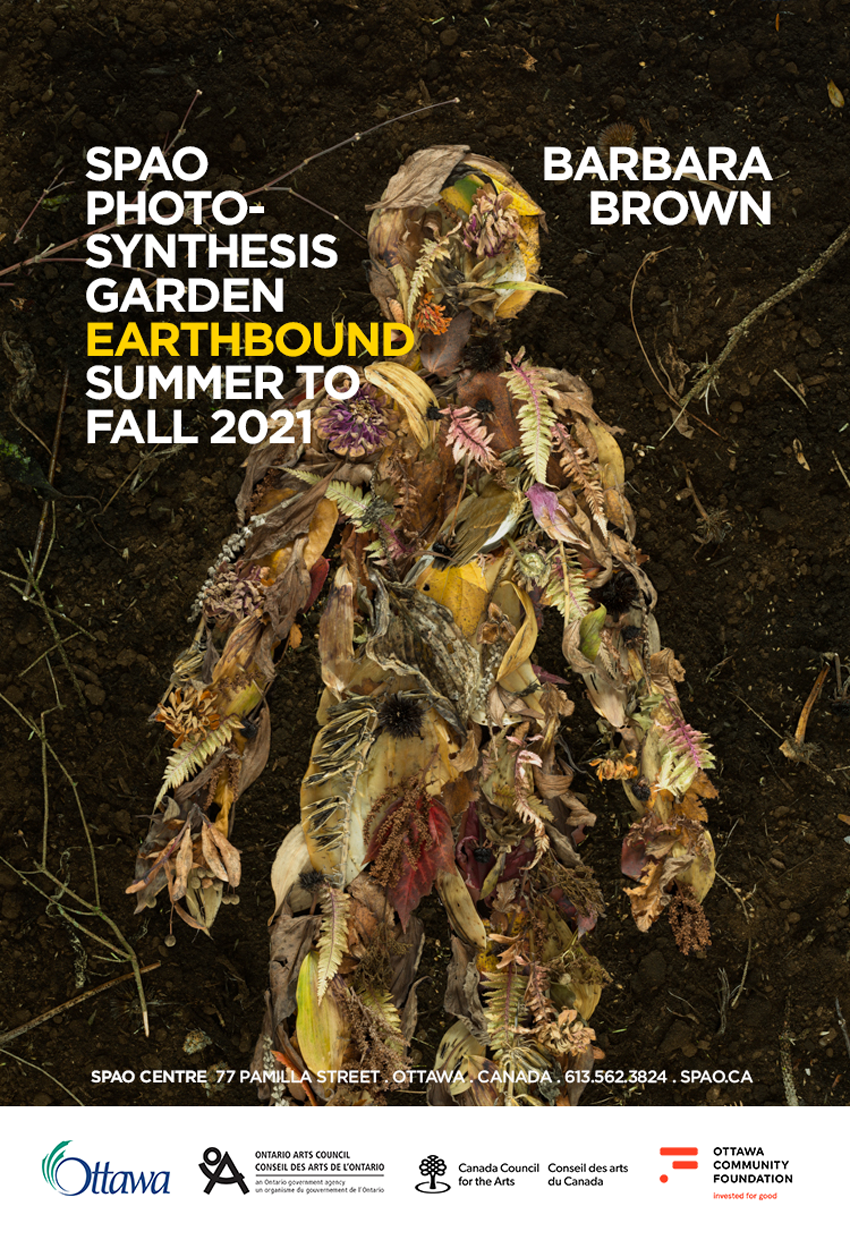
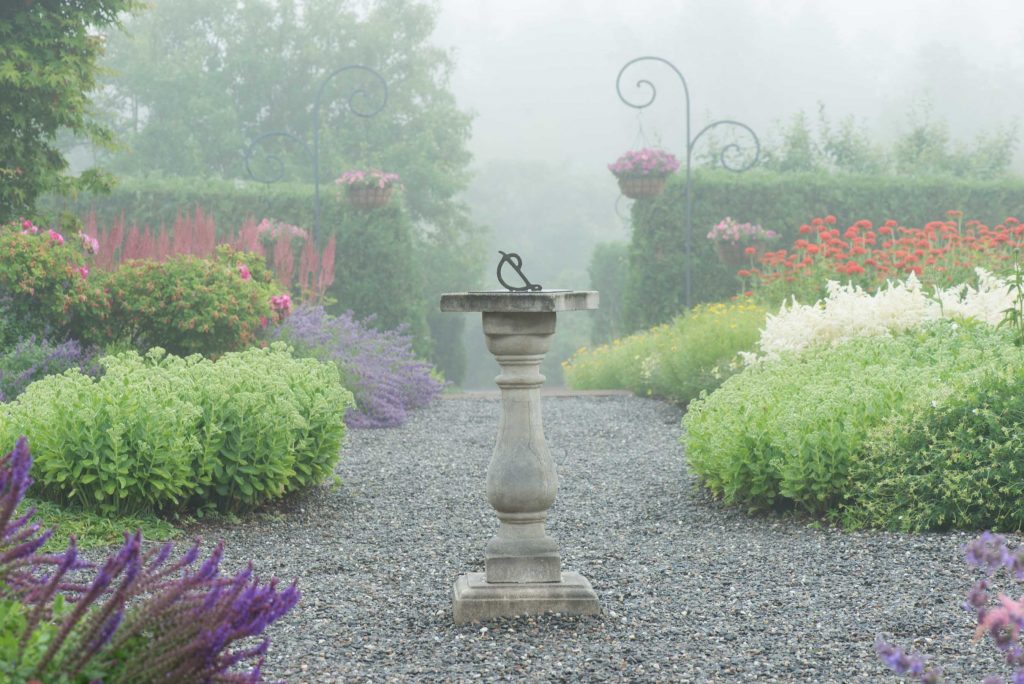
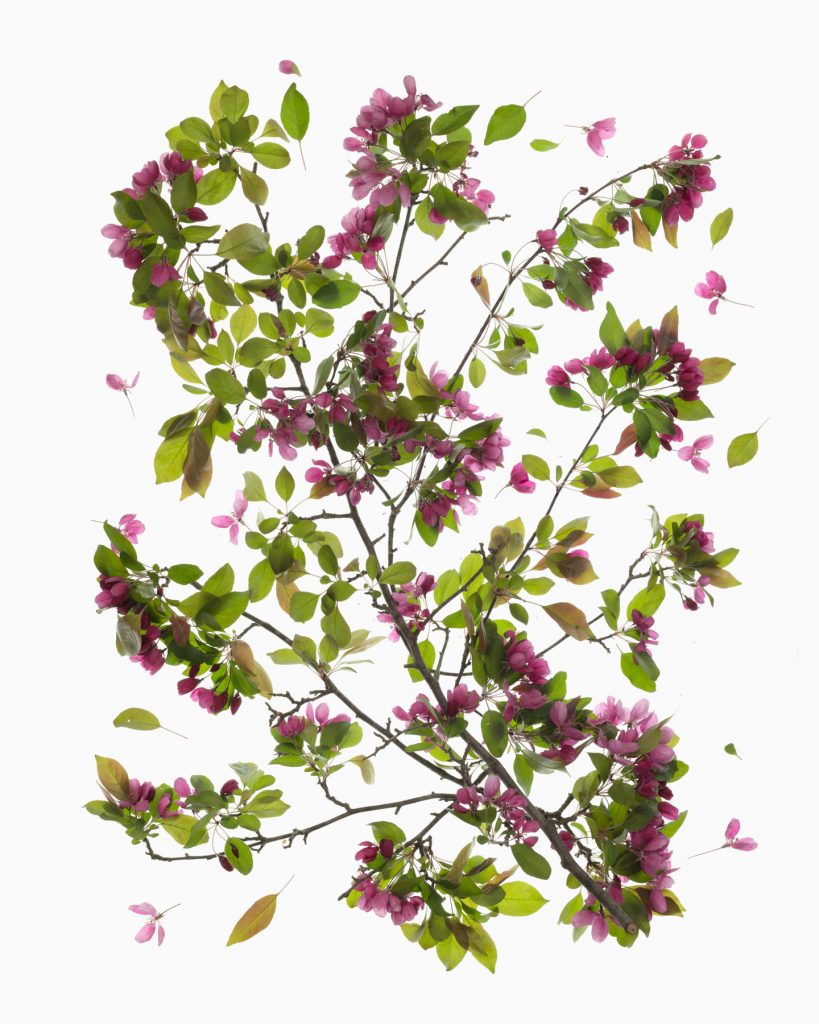
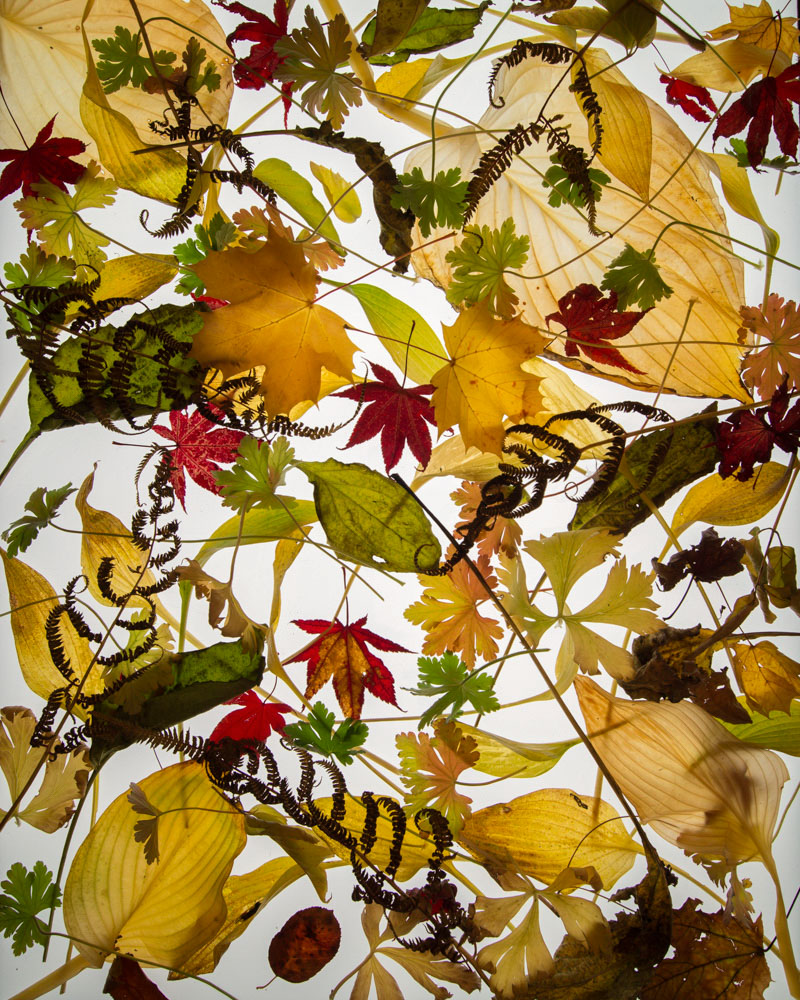
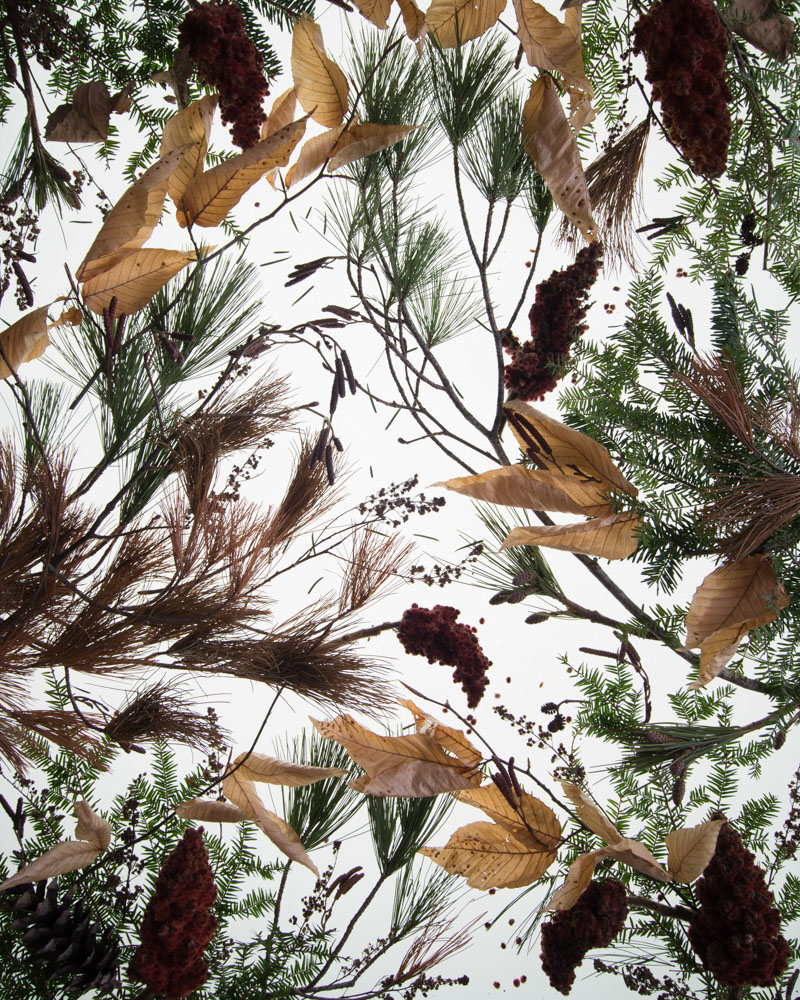
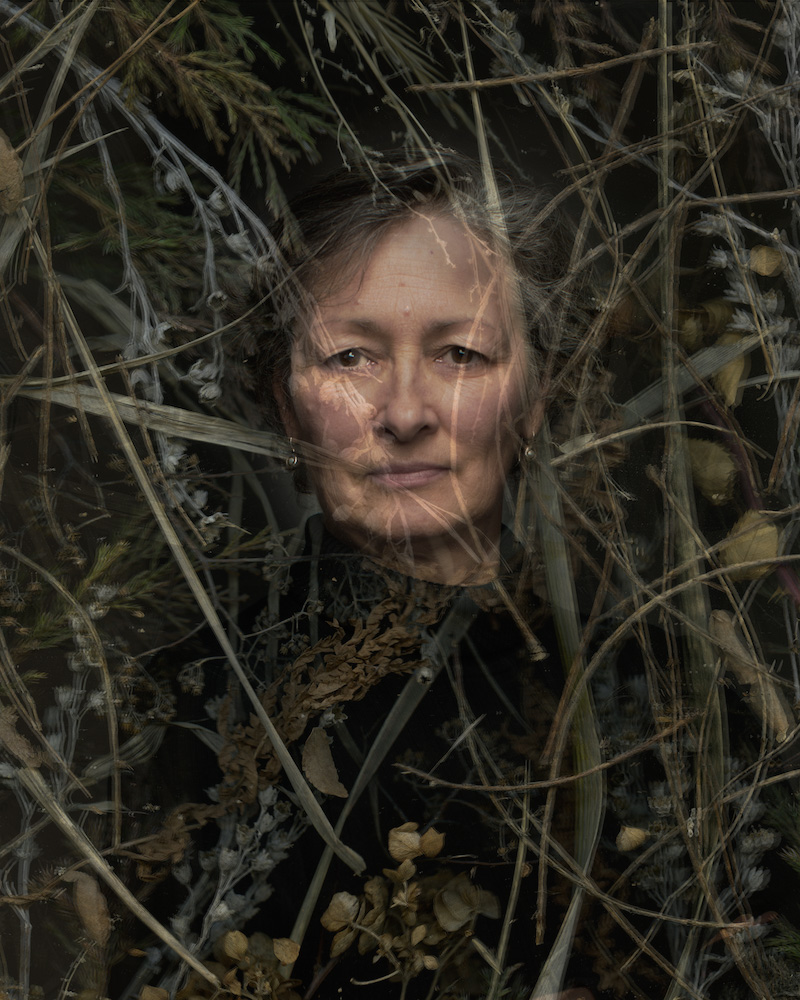
The SPAO Centre Gallery proudly presents EARTHBOUND, featuring Ottawa-based artist and SPAO alumni, Barbara Brown. EARTHBOUND imagines the human body in relation to the growth patterns of the earth. Brown’s work serves as a monument to all those who have come before us, with an underlying awareness that death feeds life. SPAO’s Photo-Synthesis Garden is an unique outdoor exhibition space that introduces audiences to temporal and botanical elements to the photographic arts. The images are suspended above a crop of edible plants that will grow and die acting as a parallel to the seasonal cycle depicted in the images. This living installation can be visited several times for a deeper understanding of the work over the next few months.
The School of Photographic Arts Ottawa, 77 Pamilla, off Preston Exhibition Dates: Thursday July 1 to Friday October 15 Viewing Times: Sunrise to Sunset!
Untitled (Gray Oil), 2010-11 Daniel Sharp Oil paint on canvas 16 x 20 in. / 40.64 x 50.8 cm
Poetics of the Field
What do the photographer and the painter have in common? Photographer Barbara Brown and abstract painter Daniel Sharp maintain separate studios and practices that do not overlap, yet, there are similarities and coincidences between their works. These two practicing visual artists have been life partners for the past 30 years. It is intriguing to view their works side by side. Their artworks seem to cross over at certain points and ‘talk’ to each other in a dialogue of light, colour, and organic forms.
Brown uses photography to capture compositions she creates using natural materials from her local environment. The plants and flowers she selects are both the subjects and mediums of her complex compositions. These compositions represent particular gardens, seasons, or natural environments. Brown seeks to create immersive images that refer back to the experience of being in a garden or forest. She is interested in breaking down the barriers between subject and object in nature. In her work, Brown negotiates an ancient relational way of being in the world.
Sharp paints compositions that he describes as proto-poetic abstractions. He sees these gestures as utterances of thoughts and feelings sequenced into visual essays, prior to linguistic descriptions or writing. His works are fairly simplified abstract paintings, something like an early stage of expression, analogous in some ways to a poem or a song. He is interested in the impulsive and unmediated gesture, balanced with a constructed, composed structure. He strives for deep colour, the dynamism of forms, and the soft nuances of a composition.
Brown has looked towards abstract expressionist painting for compositional clues similar to Sharp’s use of photography as a research tool to see the world.
Oriental Poppy from the Etymology of a Flower series Barbara Brown Archival pigment print 24 x 30 in. / 60.96 x 76.2 cm
Barbara Brown Barbara Brown trained as a visual artist at the Nova Scotia College of Art and Design University and completed her graduate work at Manchester Metropolitan University, England.
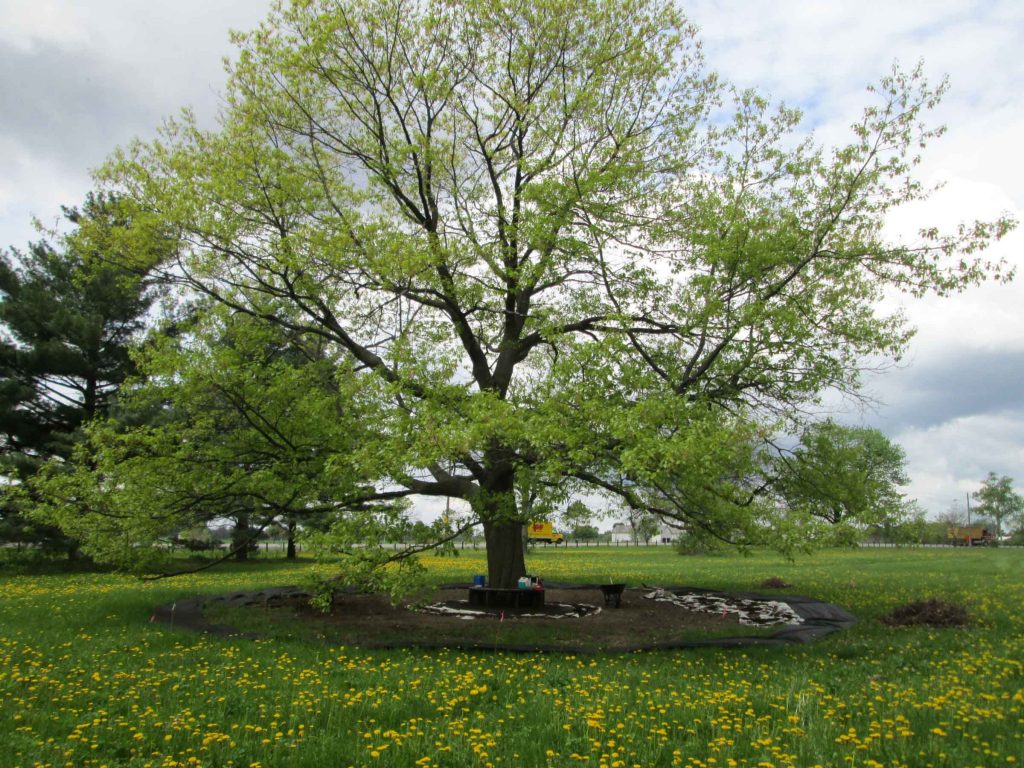
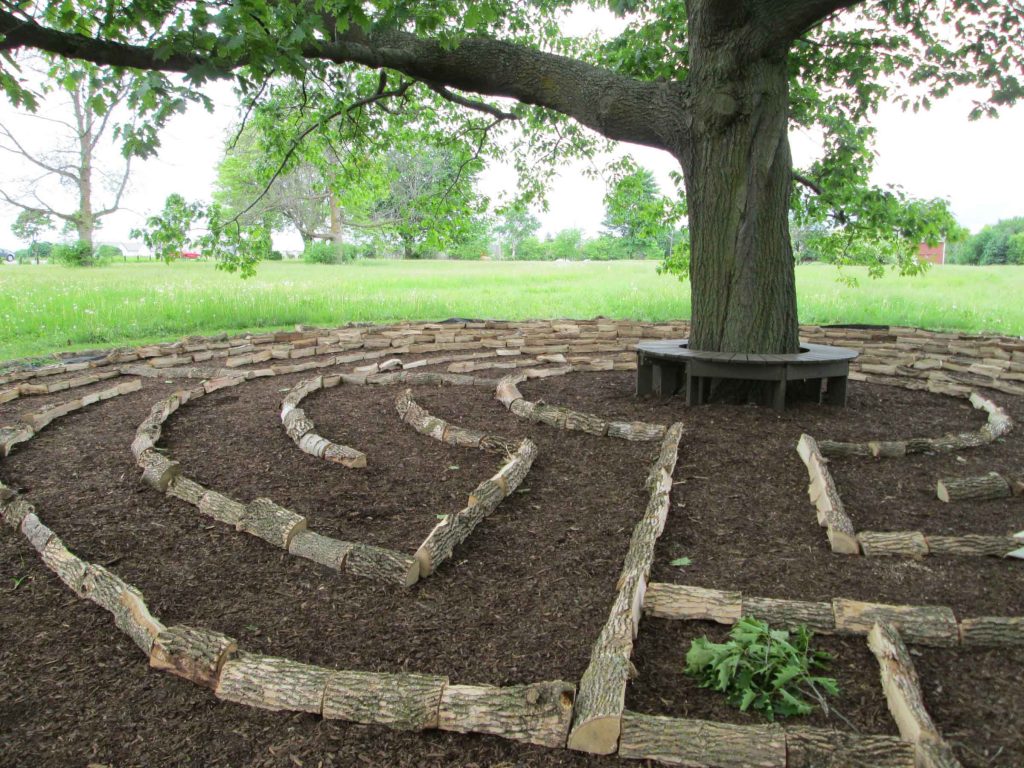
Brown has exhibited in solo and group shows nationally and internationally, most recently in LifeCycle Conversations a collaboration with sculptor Cynthia O’Brien at Karsh-Masson Gallery, Ottawa and Beyond the Edge: Artist Gardens, where she created Red Oak Labyrinth, a 60’ walking path installation beneath a hundred year old oak tree. Brown recently completed month long residencies at Mauser Foundation, Costa Rica, and Kingsbrae International Resident for the Arts in St. Andrew’s, New Brunswick. She participated in the International Artistic Residency Kala Chaupal in India where she collaborated with fellow artists to create Matka: A Portrait of Traditional Water Carriers.
Daniel Sharp Daniel Sharp was born in Lacombe, Alberta, Canada. He has lived in Ottawa since 1982. Sharp worked at Artspace Gallery in Peterborough Ontario (1980-82) and was Artistic Director at the Ottawa artist-run centre Gallery 101 (1989-91). From 1991 until 2017 he worked as a program officer, then manager and curator with the Canadian government’s art collection for embassies and diplomatic missions abroad. Sharp studied painting and design at York University in Toronto, receiving a Bachelor of Fine Art degree in 1979. He later undertook graduate studies in art and cultural theory at Carleton University in Ottawa (1985-89).
To schedule a private interview with the artist and or a preview of the show please contact Gallery Director, Carrie Colton at Studio Sixty Six 613.355.0359 or email carrie@studiosixtysix.ca
I recently spent a month in Costa Rica with my partner Dan and our twenty-four year old daughter. We were all artists in residence at Mauser Foundation Eco House. Sounds better than it really was but it was a creative and productive adventure.
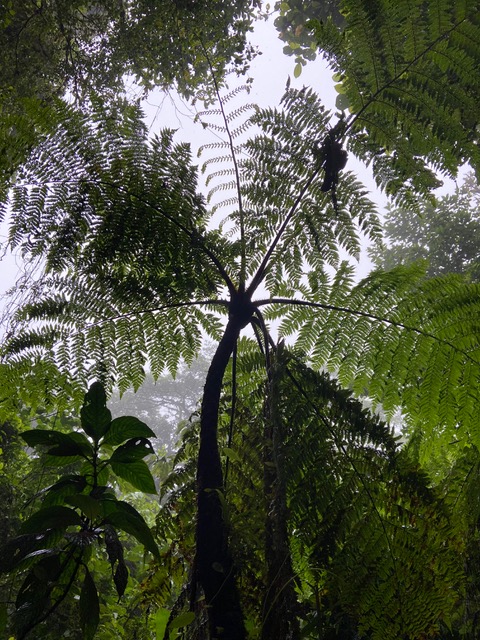
The novelty of being in such an exotic place is a draw for visually oriented persons such as myself and my family. Costa Rica is very special. There is a huge variety of flora and fauna because of the tropical conditions here, where North and South America form a connecting land bridge. There is more diversity in the natural world here than in the neighbouring countries to the north and south. I wonder if I have the eyes to see what is here.
Discovery and picture taking….
It was a thrill to discover new things and to see the beauty and magnificence of nature. We had close encounters with hummingbirds, butterflies, monkeys and ocean waves.
Collecting and Preserving
Often an artist will collect natural objects, found in the places they visit. Here at the end of the road in a rural setting with not many people around, our focus is on the flora mostly and the extraordinary birds and insects that happen by.
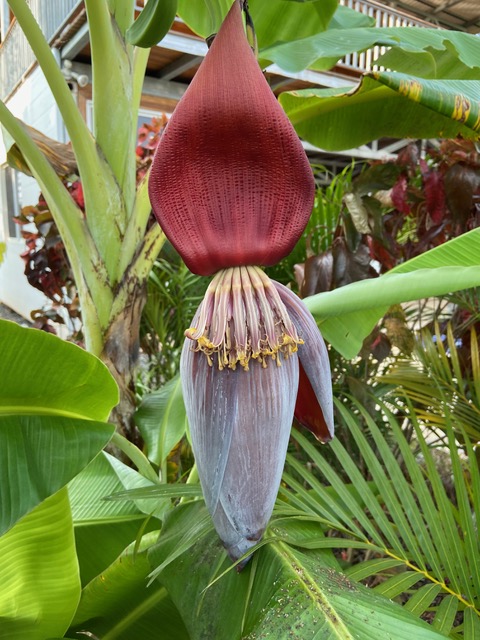
Flowers catch our eyes as they punctuate the landscape with splashes of colour. We take pictures of course. Flowers are plants’ triumphant moment! It’s all about sex and reproduction, not dissimilar to our human culture. Naturally they are showy, in an effort to attract pollinators.
Banana Flower
Anthotypes:
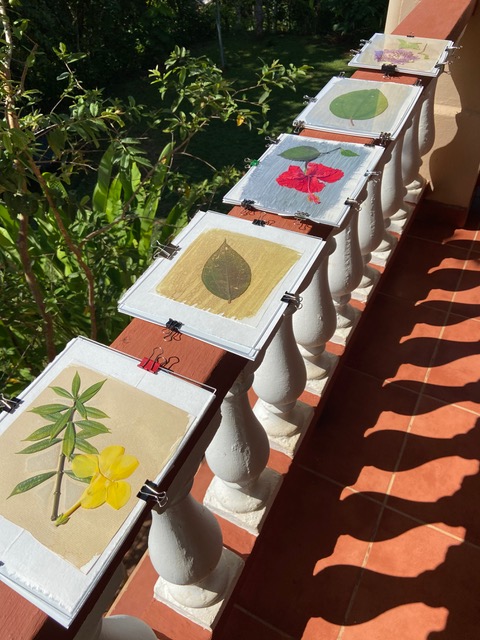
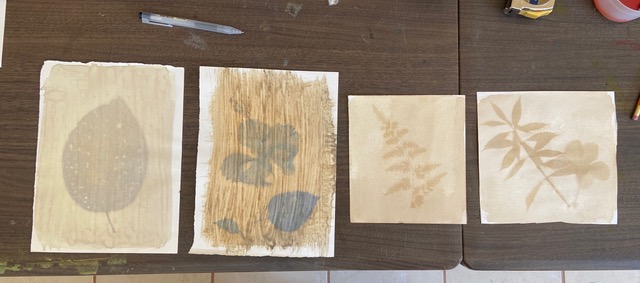
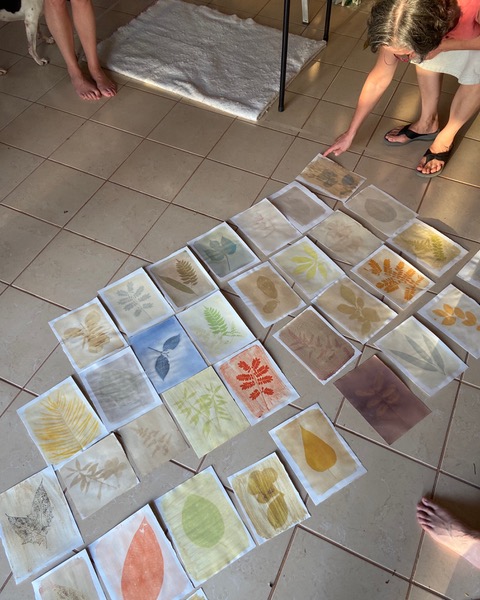
My project here in Costa Rica is the archaic process of Anthotypes, using flower petals to make a light sensitive emulsion, which fades when exposed to the sun. The process is similar in some ways to an old fashioned herbarium, where plants and flowers are collected, pressed, mounted and labeled. These prints are a marker of particular time in a particular place.
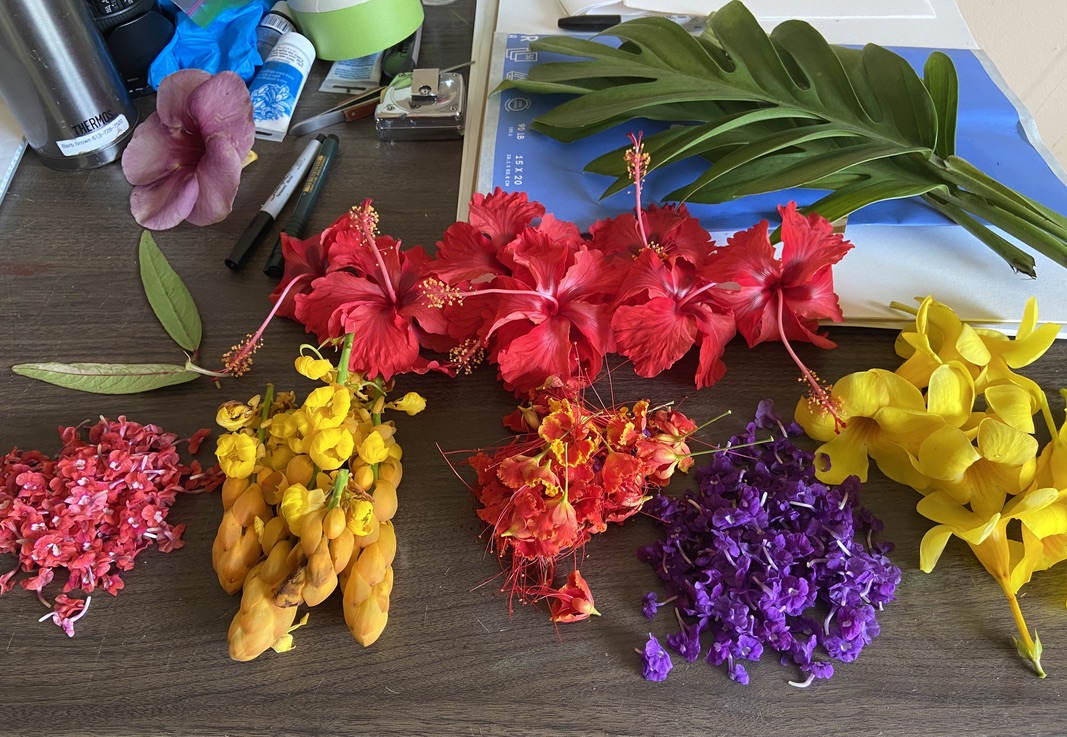
To make an anthotype I took the freshest flower blooms of the day, ground the petals into a paste, diluted that with water or alcohol and applied it to paper. The resulting emulsion renders the paper sensitive to light and it can then be exposed to sunlight to fade. I used leaves as a light resist to create mostly tone-on-tone images.
Three different colours of emulsion from the same flower.
The prints are left to be exposed by the sun for a day or two or ten. The length of time of the exposure is an artistic decision as well as an experiment. This project has been a discovery of the plants of this particular place and of my time here. And like memory they will fade with the passing of time.
Anthotypes being exposed to the sun.
I think this work might be presented as a book project entitled “On the Nature of Impermanence” (working title). The book would be a collection of plants I found and which I preserved in this odd way, and would also function as a record of my explorations, discoveries and art-making in this place.
Initial experiments with Anthotype process
I initially thought the experimental phase would lead to the making of larger and more complex compositions but I found that the project has been more about the process and not so much about the end result.
Costa Rica Anthotype Collection
Cross Pollination
I am undertaking this residency with my family. My partner Dan is making paintings, mostly abstract, but I can see the influence of this place creeping into his colours and forms. He uses a lot of green! Our daughter Willow is working on a project of natural fabric dyeing using plants and soil.
As I observe what Dan is working on, I am inspired to make a companion piece to one of his compositions. I notice that one of the anthotype emulsions I make is a similar green to a colour he is painting with. Then he starts to make fields of colour in a rectangular form that look just like the emulsions I paint on the paper I am working on. He remarks that I am really a painter!
I notice how Willow’s dye baths change with the various mordants she is using to set them and I try adding a little baking soda or vinegar to my emulsions to see if they will yield a different colour. Sometimes it works!
One of the other artists in residence tells a tale of how scientists only publish the successes of their experiments. This gives me something to think about and another way to view the “failures” in my project of anthotypes. If I exclude these failures because they look too dull, then am I being true to this place and to the process? How will anyone else learn from my mistakes if I edit out all my failures? This is something I struggle with as I am not a scientist, I am a visual artist and my decision making is visual and aesthetically driven.
In Conclusion:
In Costa Rica we have been to the beach, to a local waterfall, to the nature reserves and we even traveled to a different ecological zone to escape the relentless heat. Each of these little adventures becomes part of the background, part of the field of what an artist works from. Traveling is a way to know a place that is very different from our home.
For me it has been important to discover and have access to work with plants that are very different from my home place. I have made work that is very much about this place, even though I am not from here and don’t belong here.
I am very grateful to have been able to spend time in a place I have only ever dreamt of. Thank you Mauser Foundation for the opportunity to discover Costa Rica in a creative, intimate and artful way.
Palette of the day. A variety of flowers to be turned into Anthotypes.
Can you expand on your Installation – Red Oak Labyrinth?
Many people in Ottawa have long desired to build a Botanical Garden. A plot of land was identified and a group of artists were invited to make temporary installations to animate the area and draw attention to the idea and the place.
With the curators, I toured the area in late November. They had asked that each of the six invited artists use live plants in their installations. As the area has yet to be developed it had no water supply and I couldn’t image being responsible to keep plants alive all summer in an open field without water. So, what to do?
Beginning of Red Oak Labyrinth, in early spring.
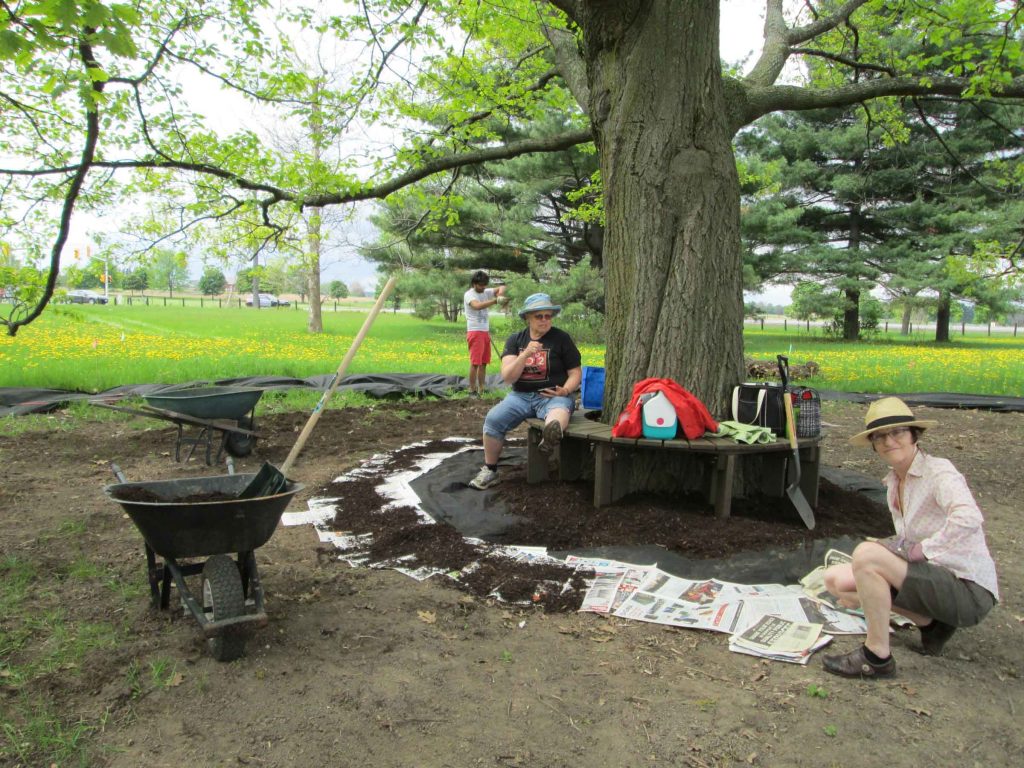
A large oak tree caught my attention while touring the field. Its form was clearly outlined as the leaves had fallen and the branches were bare. I’m not sure now what I was imagining but the curators said they thought I might make a labyrinth. For about seven years I had been building these ancient meandering walking paths and offering retreat workshops as a form of meditation or contemplation. The old Red Oak tree had several low branches which defined a welcoming space beneath it, and I could imagine being held by the tree in the circular pattern of the labyrinth. I made a plan to construct a 7-circuit Chartres style labyrinth with a circular bench around the trunk of the tree. We began the work in early May before the leaves had come out. With help from family, friends and volunteers we cleared the weeds and prepared a 70 foot circle beneath the tree.
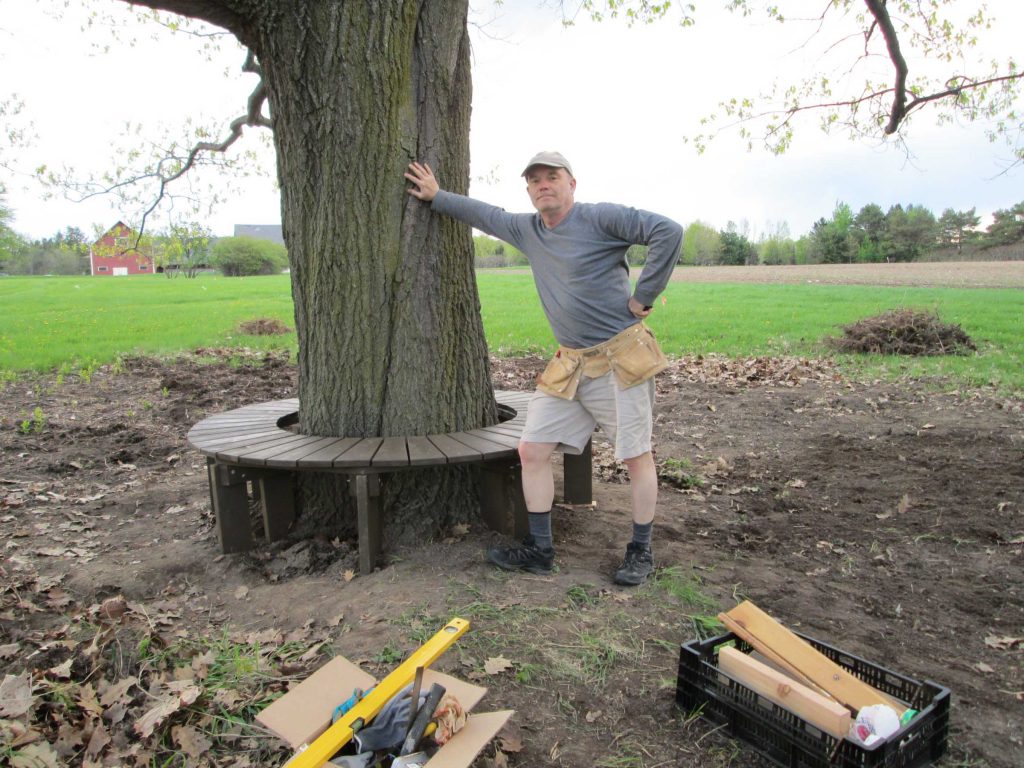
Dan and his round bench for Red Oak Labyrinth.
My partner Dan built the bench and my son cut and split several cords of wood to define the paths of the labyrinth. A call was put out to the community and people came to help set out the cordwood in the circular pattern and then cedar mulch was added to the paths. The labyrinth was completed just in time for the Summer Solstice.
Building the Red Oak Labyrinth with volunteers.
A celebration was called for, even though the exhibition would not open for another week. I called upon my music therapy colleagues and asked if they could form a spontaneous choir of female voices to provide a setting to welcome the first visitors to walk the new labyrinth. On a warm and sunny evening, many friends came bearing flowers to bless the labyrinth and the singers arrived wearing white. The labyrinth was bedecked with white and yellow steamers. Many were enchanted by the experience that evening as they walked the ancient path of mystery and wonder.
Red Oak Labyrinth, made with split Ash logs.
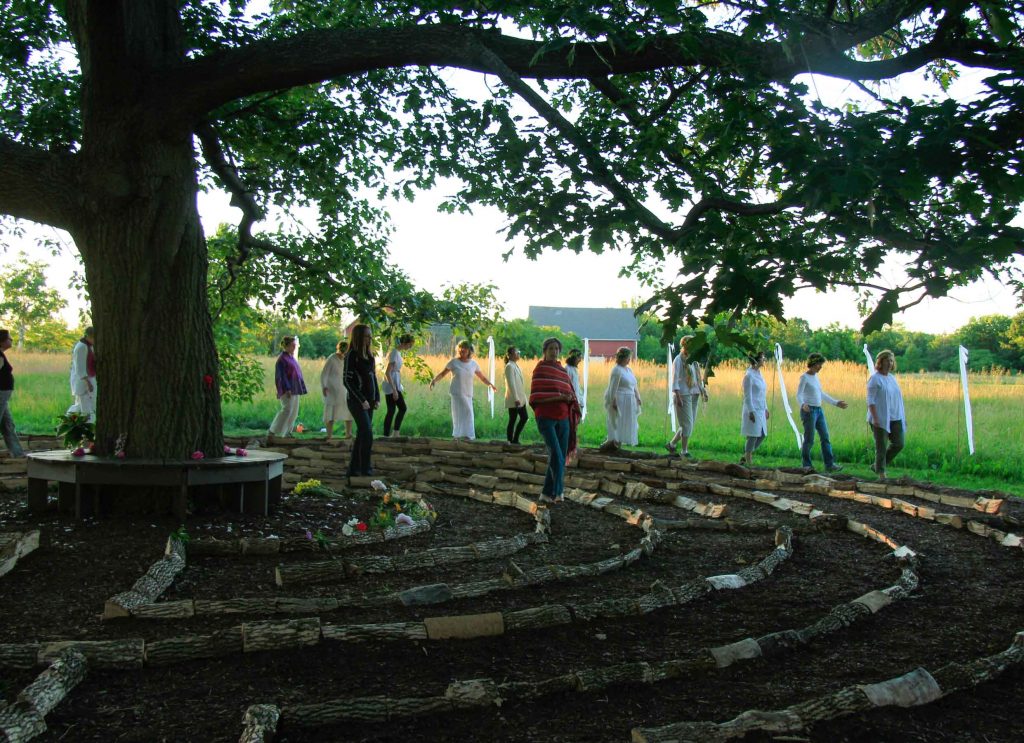
The Red Oak Labyrinth was opened to the public the following week and over the next 3 months many, many, people came and left surprisingly profound comments in the weather-proof notebooks tied to the bench in the centre of the labyrinth. I visited many days to tidy the place and to walk the labyrinth and write in my own journal. It became a popular place to visit that summer and helped to establish the place and the dream of a Botanical Garden in the centre of the city.
Red Oak Labyrinth, Celebrating Summer Solstice.
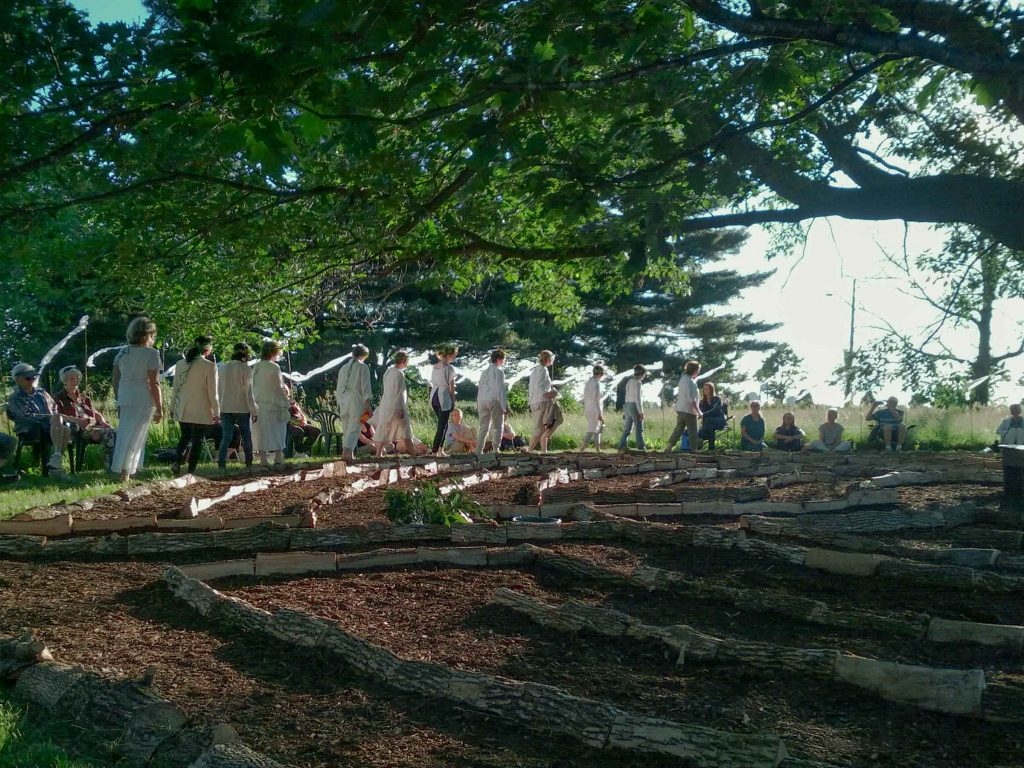
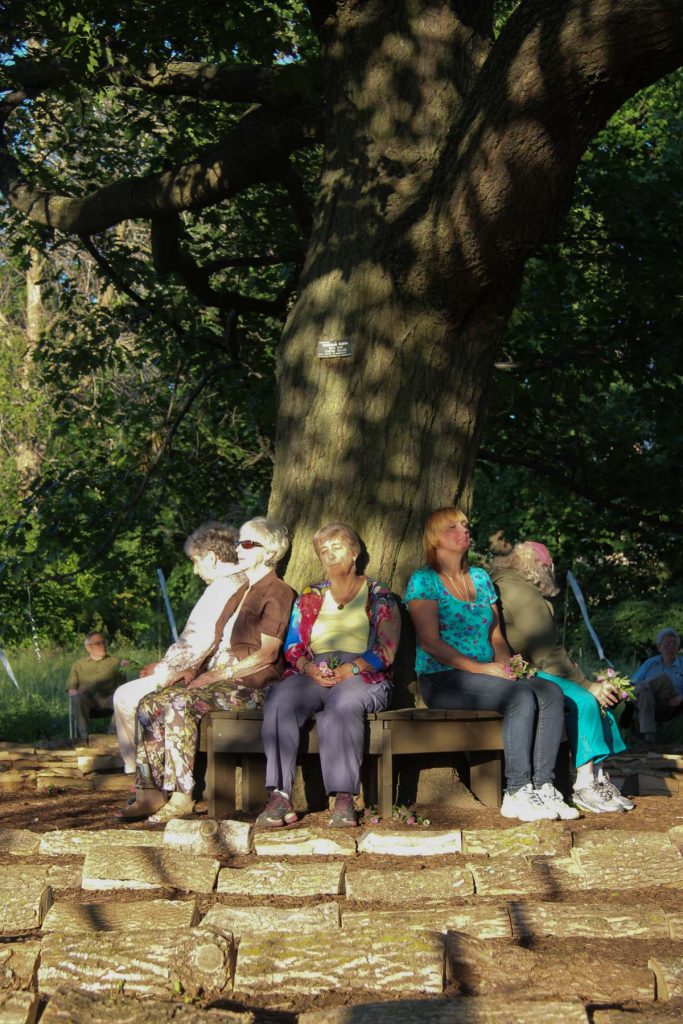
At the end of the September the exhibition closed and I had to do something to acknowledge all that had taken place in what had become a rather special place for many visitors. I put out the word that a Feast would take place before the dismantling of the labyrinth. About twenty people arrived bearing beautiful dishes of fine food. Words of blessing and thanksgiving were spilled and then collectively we picked up and stacked the cord wood that had been laid in the spring to form the labyrinth. As a gesture of thanks to those who had gathered to help me, I offered a fine oak aged port and spiced shortbread cookie in the shape of an acorn.
Red Oak Labyrinth, Celebrating Summer Solstice, with a female choir.
My gift at the end of three months was eight notebooks filled with words of praise and comments and stories left by people who had visited the labyrinth beneath the oak tree over the summer. I might one day put all the photo documentation and notebooks together into a book as a way of remembering what was more than I could ever have planned or imaged.
Red Oak Labyrinth, Celebrating Summer Solstice
How have you been able to combine your artistic work and interest in horticulture?
I was asked to start a new program for the Dementia Care Unit at the long-term care facility where I was working as an artist running creative arts programs for the frail elderly. My manager suggested I might try gardening as an activity. I was then thirty years old, living in a downtown apartment and knew nothing about gardening but I gave it try. I got the largest seeds I could find (green beans) and a big clay pot and some soil. To my surprise the men (it was a Veteran facility) loved working with the soil and the beans grew and I was hooked. It was a trial and error approach and I learned on the job. I soon signed up for classes in horticulture and became fascinated by the world or plants, flowers, trees and shrubs. My job afforded me the opportunity to follow my interests and to develop a program that became a comprehensive year around combination of gardening activities both indoors and outdoor, with art activities related to plants and gardens. Over several years, I became an avid gardener and built a sizeable garden at my home. With so much of my attention focused on the garden and plants it was a natural step that my artwork became focused on the garden.
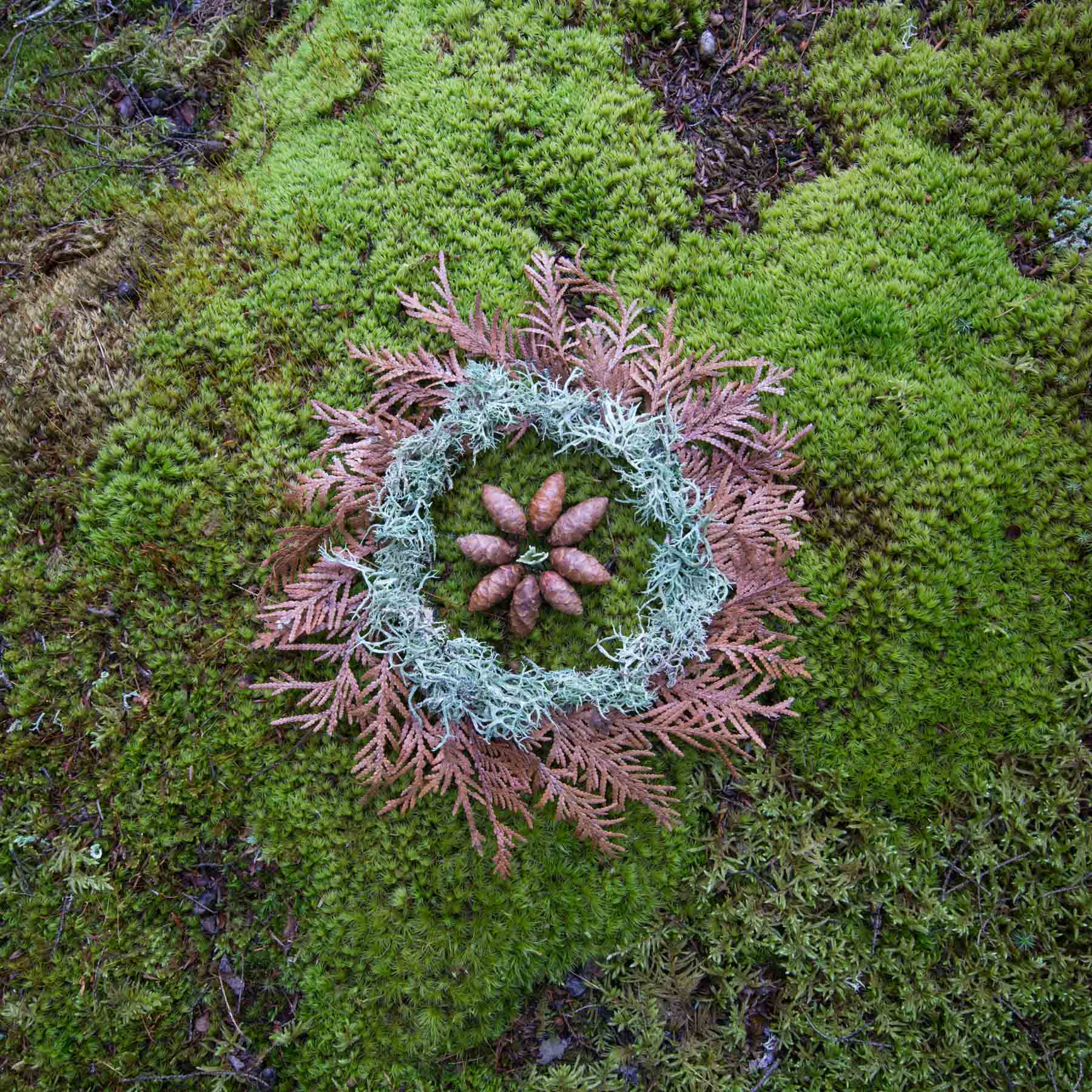
Circular Time Series ‘Wheel of Cedar’
After many years of gardening, my art making became an extension of my garden making. It become a focus for my contemplations on the place of interaction between humans and nature and my understanding of a garden as a human construct.
Fast forward many years and now my home garden has become the source of most of the material I include in my photographic work. It feels like a full circle and leads back to the beginning.
Comment on your work in relation to the cycle of life?
Working with plants is a very relational way to observe the cycle of life. Some plants will complete their lifecycle in one season and they offer a speeded up version of what a human life cycle is. The same can be observed in the pronounced four seasons which we experience here in Canada. Winter is for real here and everything green dies except the evergreen trees and shrubs. In spring one can see the changes from day to day as plants sprout out of the moist earth and come into their full form in early summer. The blooms of summer soon set seeds and complete their growth by fall. As the temperature drops so do the leaves and a gloriously colourful ending happens just before winter sets in again. Where I live, we are fortunate to have four very distinct seasons to experience.
As I spent time with the elderly who were in the ending of their days it was psychically and spiritually relevant to emphasize the cycles of life and to acknowledge and celebrate all the seasons as a way of reinforcing the right and proper ending of all things. I have extended this contemplation into my own artwork and I have been surprised at the beauty that is to be found in the fading and dying of plants, and by extension, of people as well. It is one thing to know a beautiful fresh bloom in its full glory but also to see the exquisite contortions of the withered and wilted sculptural form of its ending.
Both my therapeutic work and my art work have allowed me to know and appreciate all points on the cycle of life and not to over focus on the beauty of youth as is the want of our current culture.
You have had several residencies, including one in India. Can you explain about this residency?
Why you applied to go to India for a residency?
My partner Dan and I were invited to join a group of international artists for a 10 day period in Jaipur, India to make art addressing issues of water scarcity in India.
Where in India did it take you?
The Kala Chaupal residency was hosted and organized by Leenika Beri, a communication specialist who is giving back to her country through organizing art-focused events . We were accommodated at the Diggi Palace Hotel in Jaipur, an old family compound now run as a hotel by the Diggi family. Most of the artists were assigned studio space at the Hotel in a large open building and some artists worked off-site at a paper making mill and a sculpture foundry. My practice is now photo based, so I set up an improvised studio in an open stairway area of the hotel’s courtyard.
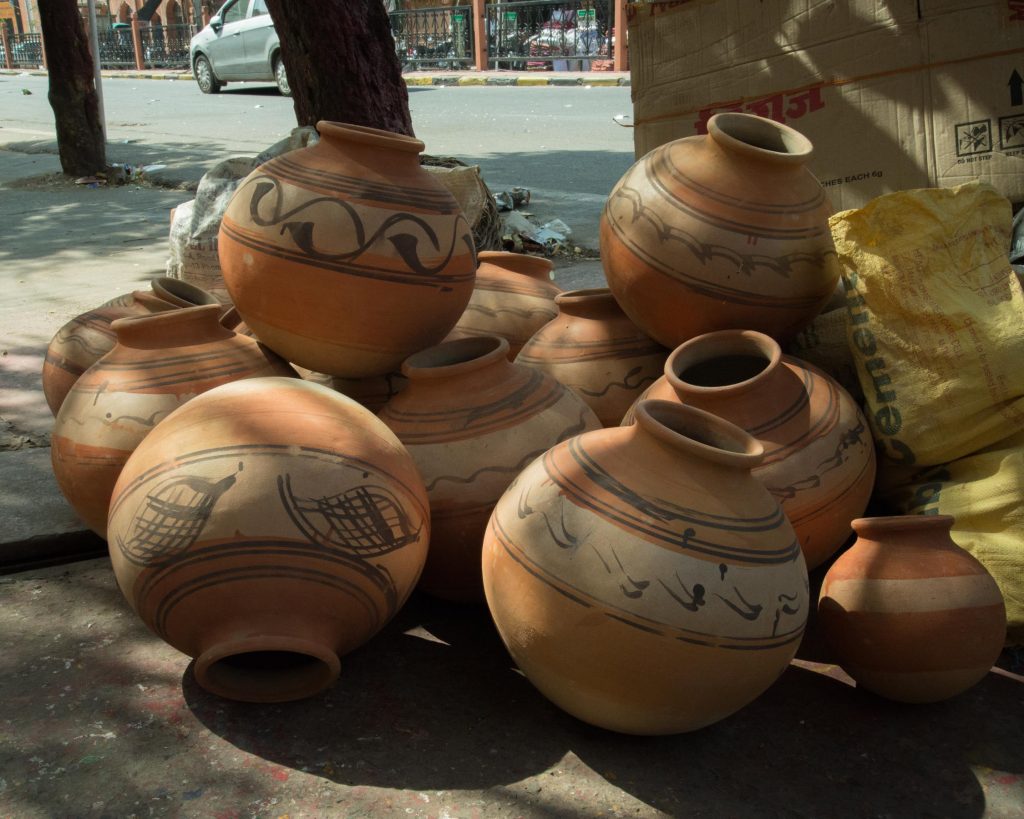
Matka Water Pots, Jaipur Market
What work did it lead to?
Before going to India I did some research and knew generally what I wanted to say but I had no idea what that would look like. Having visited India previously I knew that the people of India have a very different and special relationship with water that we here in Canada do not. It seemed at some level rather perverse to be coming from Canada with our vast resources of water and traveling to India where water has become scarce and challenging to manage, not to mention highly political.
Matka Water Pots, Jaipur, India
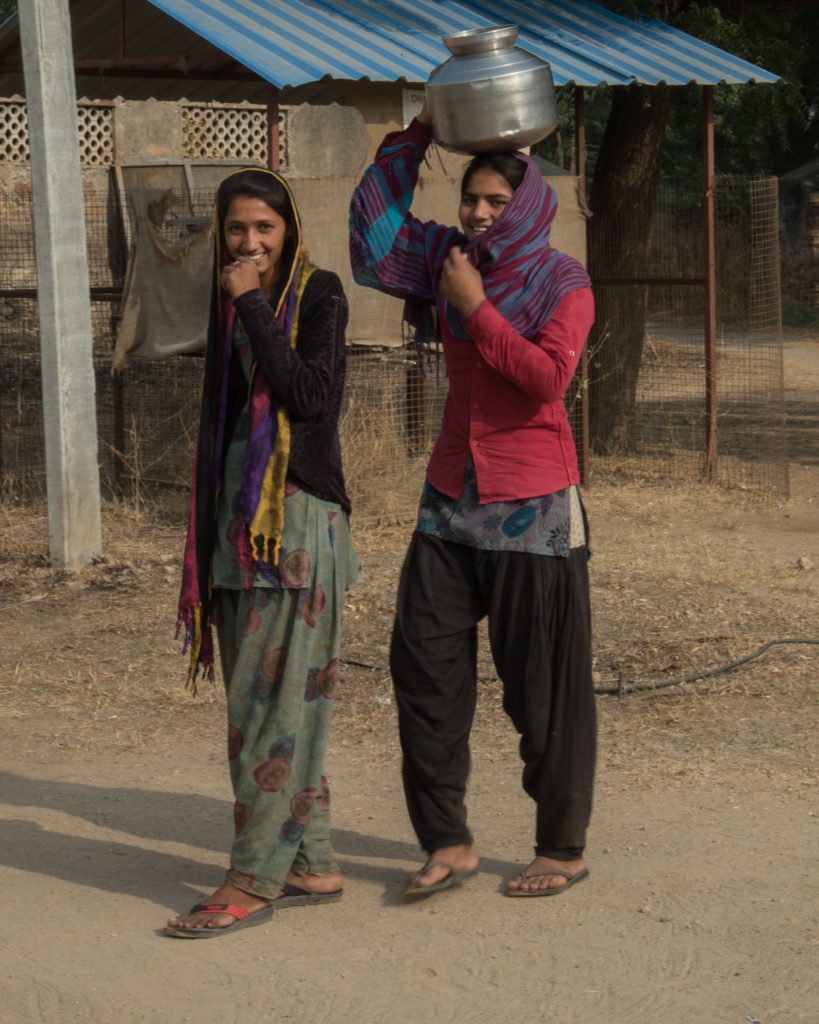
Early on in our residency I went to the local market to purchase traditional earthenware water pots to see if they would inspire something. I had seen them employed in many places I had visited previously. It is such a contrast to my experience at home where water comes on demand from a faucet. I was showing the water pots to a fellow artist and explaining that the pots resembled a pregnant belly. Her eyes teared up as she understood the very visceral connection women have with water. Indigenous women in Canada understand themselves to be water carriers in a similar way that India women understand themselves. I also learned that it is women’s work to carry water in India and also in many other traditional cultures.
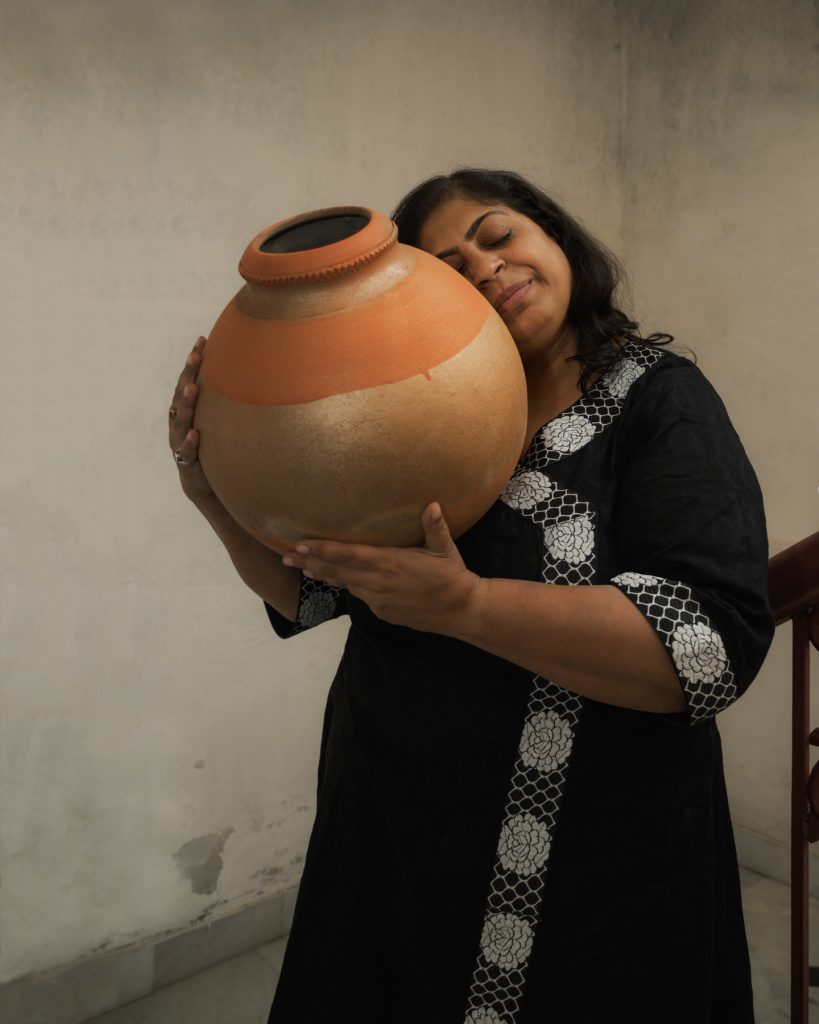
Matka Portait Series, Moutushi, India
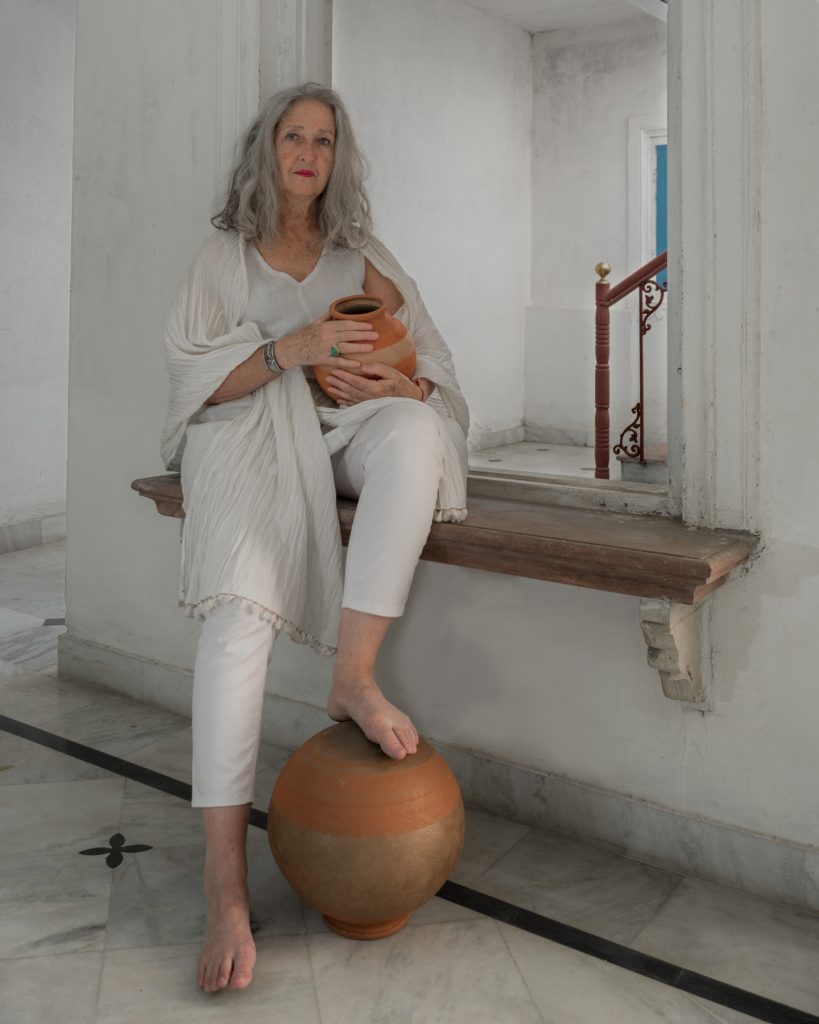
From that encounter I got the idea of making portraits of women with earthenware water pots. Each session began with a conversation as I explained my observations regarding the connection between water pots and women’s bodies. We talked about our shared experiences with pregnancy and mothering. Interestingly, the India women were quick to strike a pose carrying the pots on their head as is common in India.
Matka Portait Series, Shanti, India
The North America women related to the pots as either their own womb or the children they had birthed. One of the young artists at the residency introduced herself and on her social media site stated that she was an artist and nudist. I couldn’t resist asking her if she would pose for a birthing scene, something that I knew was very risqué in Indian culture. She readily agreed and together with an older women posing as midwife we made a beautiful portrait. However, I was not surprised when both women declined to have their photographs shared over social media for the sake of their families.
How do you use photography to produce your Botanical images?
I love the feel of handling plant material and so I make arrangements of plants that are ephemeral, meaning they are very short lived. So, photography initially helped me to capture the compositions I made and allowed me to share them. I began this work outdoors, often in remote settings where I might be the only human eyes to see the compositions I made. Now I work indoors, in part not to have to deal with wind and changing lighting conditions.
Sometimes my images are made on a light box which gives a “backlight” quality to the images, reminiscent of those special moments in the garden when the sun is low and illuminates the plants as if from within.
Photography allows me to share my work but now it is the photograph that has become the driver of my work. Working as I do is very freeing. It allows me to create combinations of things that originate in nature, but are combined in a way that becomes a new view on the garden, one that can’t be found in that actual setting, one that has been created not found.
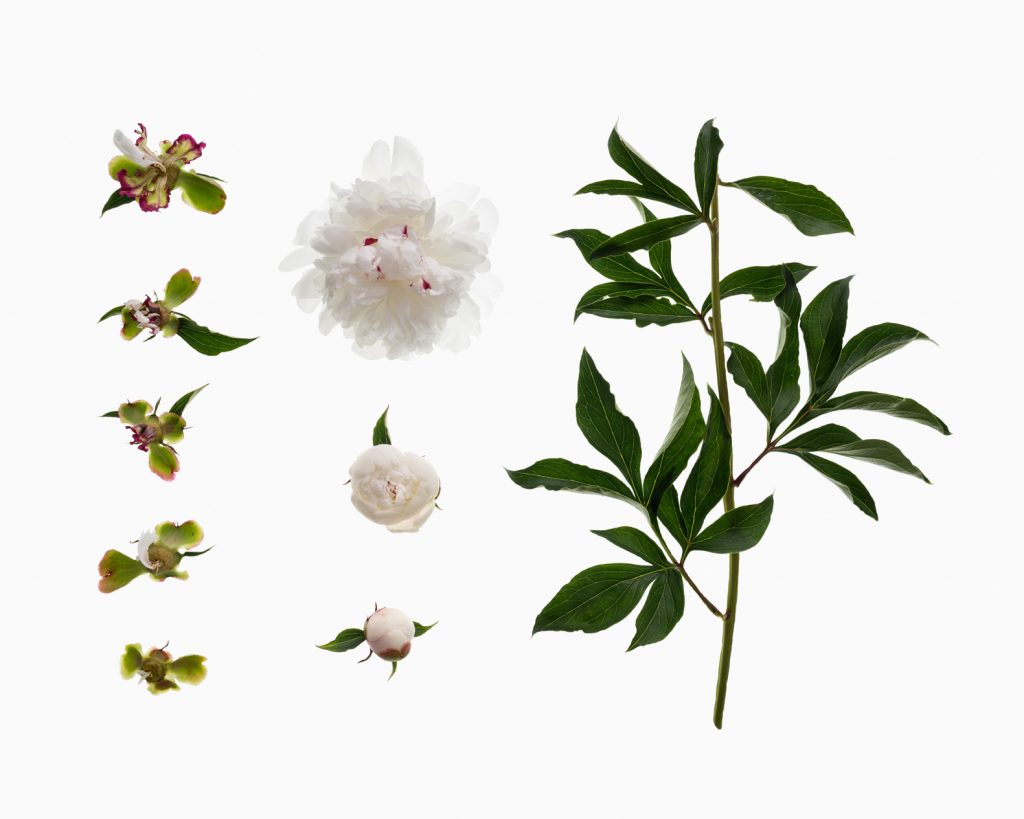
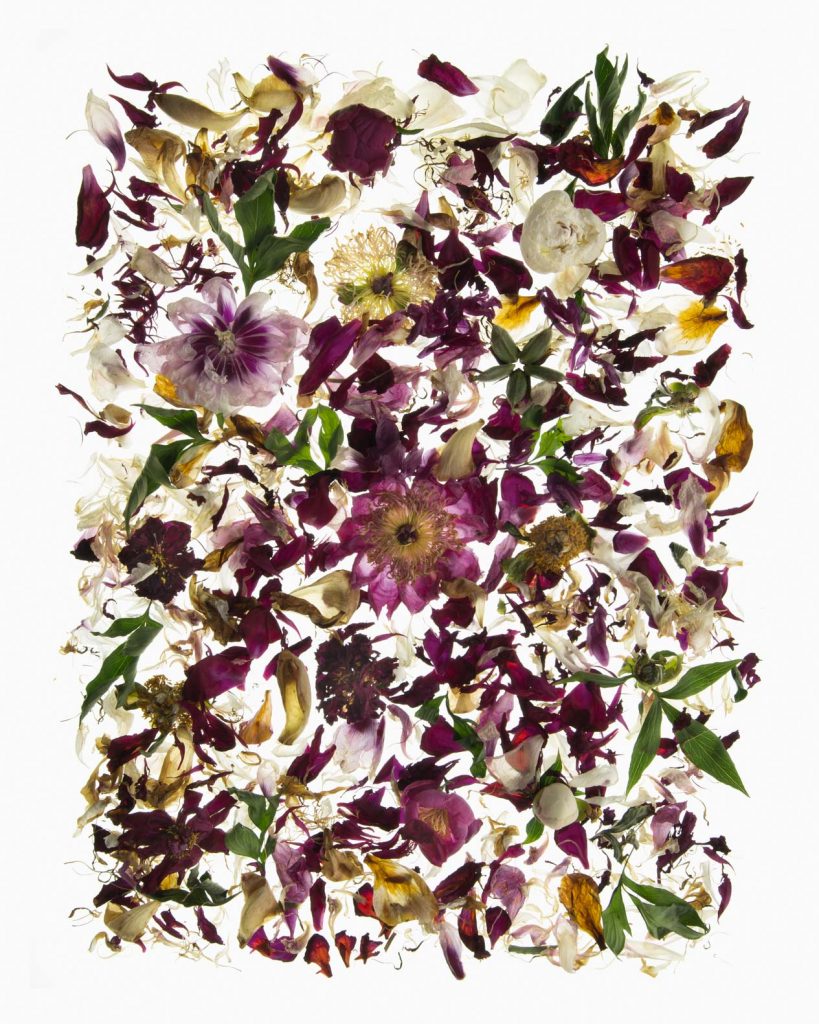
Compare, ‘Collected Garden – Fallen Peonies’ and ‘Etymology of a Flower – Peony’.
Early morning Kingsbrae Garden
At Kingsbrae International Residency for the Arts in New Brunswick Canada, I set myself a project of making photographic compositions that resonated with botanical herbarium sheets, the method used by plant sciences to preserve plant specimens for later study. Traditional herbarium sheets are mostly beige or brown leaves as the colour of plants fades as they dry. Using a photographic approach along with a scientific curiosity, I deconstructed flowers and laid them out in an arrangement that revealed the intricacy of their making.
Collected Garden Series, White Peony
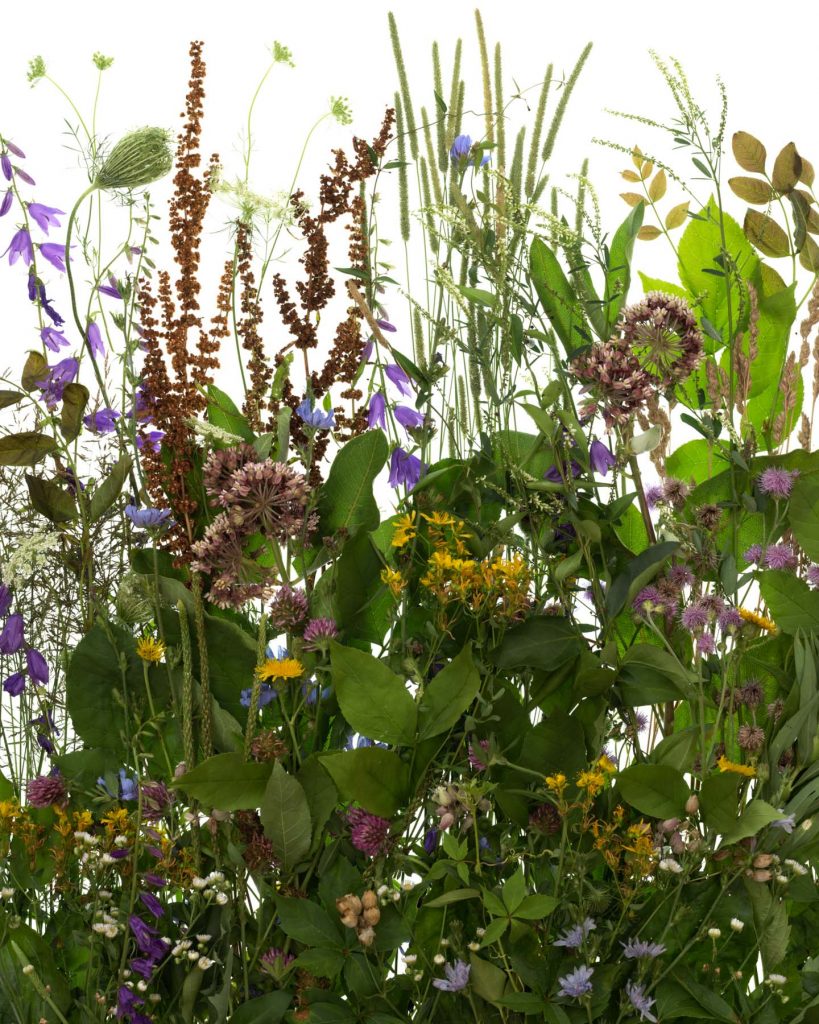
I had access to the Kingsbrae twenty five acre garden and after working for a week, I had a pile of wilted flowers by my studio door. Most mornings I would get up at dawn and walk in the garden taking photographs of whatever appealed in the moment and at the same time familiarizing myself with the place. One morning the perfect photograph require that I have one foot in a shallow pond. I got my shot and then looked down to check my footing and saw my iPhone in the pond! That just about ruined my day. By the time I got to the studio I was in a rather blue mood. I looked at the pile of dead and wilted flowers by my door and said today I’ll work with you. That accident resulted in a second body of work related to the Etymology Series which become the Collected Garden Series. As I had access to the bounty of a large garden, I was able to make several images that expressed various areas or plant collections in the garden.
Collected Garden Series, Fallen Peony
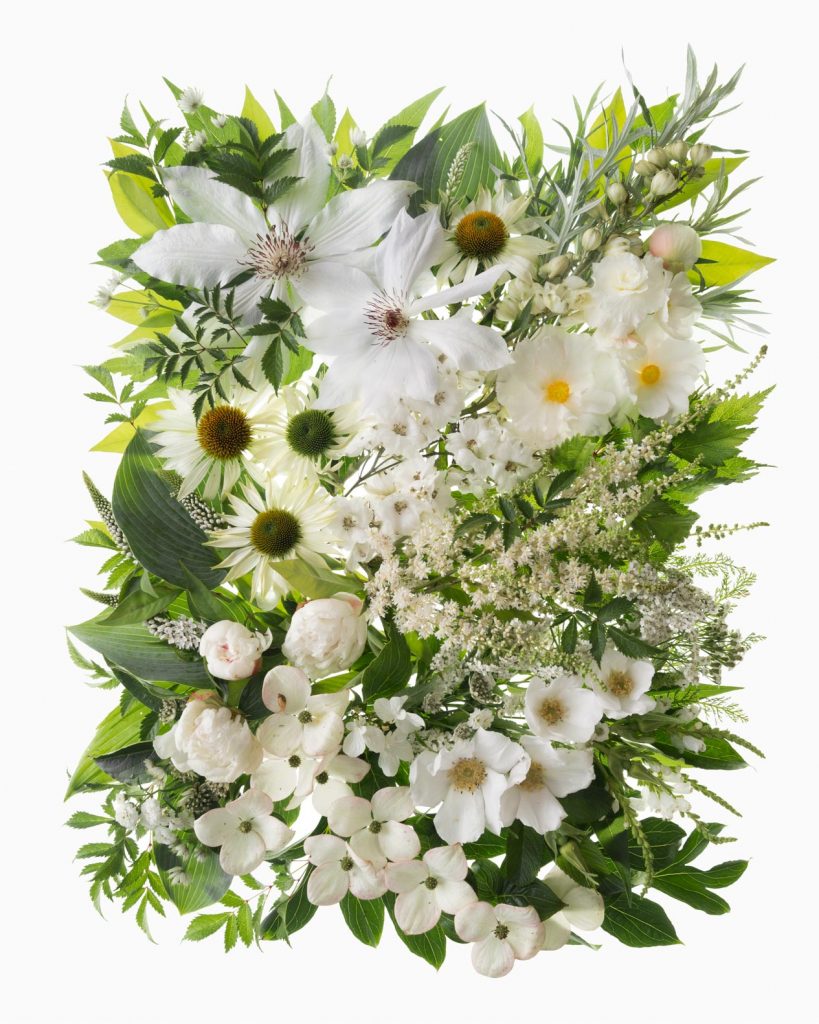
I particularly enjoyed Kingsbrae’s White Garden, an homage to Vita Sackville-West’s White Garden for Sissinghurst Castle in England. My image is something not available in the garden as it is a focused and composed view.
Collected Garden Series, White Garden
Using four pieces from your collection that reflect the four seasons.
Where I live in Canada, we have four very distinct and pronounced seasons. While it is a bit of a cliché to make art based on the seasonal change, it is the reality of where we live.
Resisting Pink
My work as a Horticultural Therapist focused my attention on the cycle of life and the cycle of the seasons as I created programs based on growing things from seed, seeing them flower and fruit, harvesting and cooking the bounty of the garden. There is something very reassuring in the return of the light in the spring and the sprouting of the first shoots and the taste of the first greens from the garden.
Rochester Field Portrait, July
I worked with one of my colleagues from my time working in Long Term Care and we set ourselves a project to collaborate for a year and mount an exhibition of the work we made together. Cynthia O’Brien is a clay artist and our exhibition entitled LifeCycle Conversations gave us both an opportunity to reconcile the burden of grief we carry from the experience of working with so many elderly residents who died on our watch, not to mention the death of our own fathers.
Gathering #3, Desire for Arcadia Series
Most of our work focused on the last chapter of the life cycle but my personal work goes on to encompass all the seasons. It does bring a kind of rounded balance to my view of life. Yes, death is a reality but so is birth the new beginning of the spring, the fullness of summer and the ripening of all things in the fall.
I offer four images to illustrate the seasonal changes and the turning of the great wheel of life.
Winter Forrest, Desire for Arcadia Series
In your opinion discuss the importance of nature, health, and art.
Using my art practice, I work toward shifting my perspective from human as machine and human as having dominion over the world, to a more holistic understanding that sees humanity as a part of the continuum of the natural world. I trace the changing seasons and the cycles of life, death and rebirth as a place of observation which I am able to more fully inhabit through my practice as a visual artist. I find myself soothed as well as oriented by handling flowers and twigs, leaves and soil and contemplating the ending of all things.
As an urban dweller I seek to explore and experience the natural world away from the built-up city. Yet my primary access to nature is in my small urban garden at home. It’s not a large garden but it holds a diverse collection of plants that has amused and fascinated me for a couple of decades. As a Horticultural Therapist I learned how important and supportive contact with the natural world is, especially in a sterile health care setting. I do wonder what the next generations of children will be like as many are being raised in a regimented tidy, interior world with far less access to the natural world than what I grew up with.
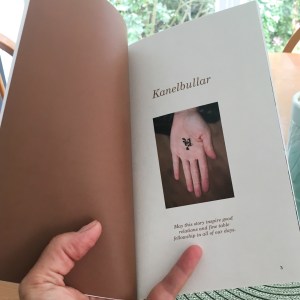
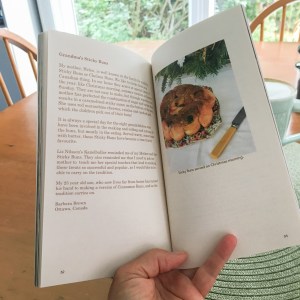
A Storied Recipe:Kanelbullar is an Artist Project exploring and documenting a family favourite and tracking its variations through three countries (Canada, USA and Sweden) and three families and is a collaboration between three artists, Barbara Brown, Liz Nilsson and Adriana Ciocci.
A Storied Recipe: Kanelbullaris the result of Alchemy 2018: an international artist-led residency devoted to exploring the synergy between artistic practice and cooking and the sharing of locally grown food within a community setting. Twelve participants gathered in the summer of 2018 in the rural setting of Prince Edward County in Ontario, Canada to explore, create and cook together. I arrived at the residency with the idea of a book project based on gathering recipes and documenting the various cooks and the dishes they made.
Each evening at the residency all the participants gathered to enjoy a meal together. I soon realized my ambition to document all the meals and the recipes was too big. Akin to eating too much, such an undertaking was too grand for our time together. So, I settled on documenting one recipe and gathering the surrounding stories and images and set to making this book. AStoried Recipe: Kanelbullar book project fermented after our time in the residency and has given rise to furthering international friendships.
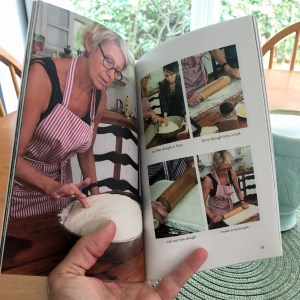
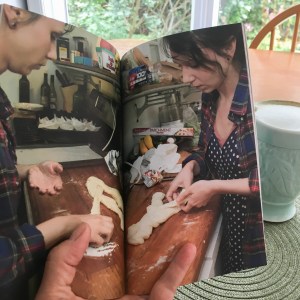
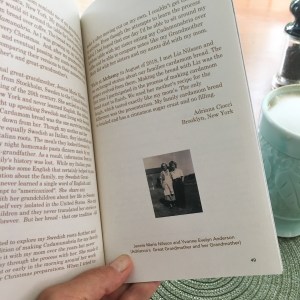
On the occasion of an open-house for the community, two of the resident artist/cooks discovered a common culinary heritage and undertook to make AStoried Recipe: Kanelbullar or Cinnamon Buns. As these little gems also form part of my family story, I was keen to document the process and story of this family favourite. The result is a recipe book containing only one recipe but in three variations with accompanying photographs and stories.
It is my hope that this book will inspire younger folk to seek out older ones, to learn together how to create family food legacies.
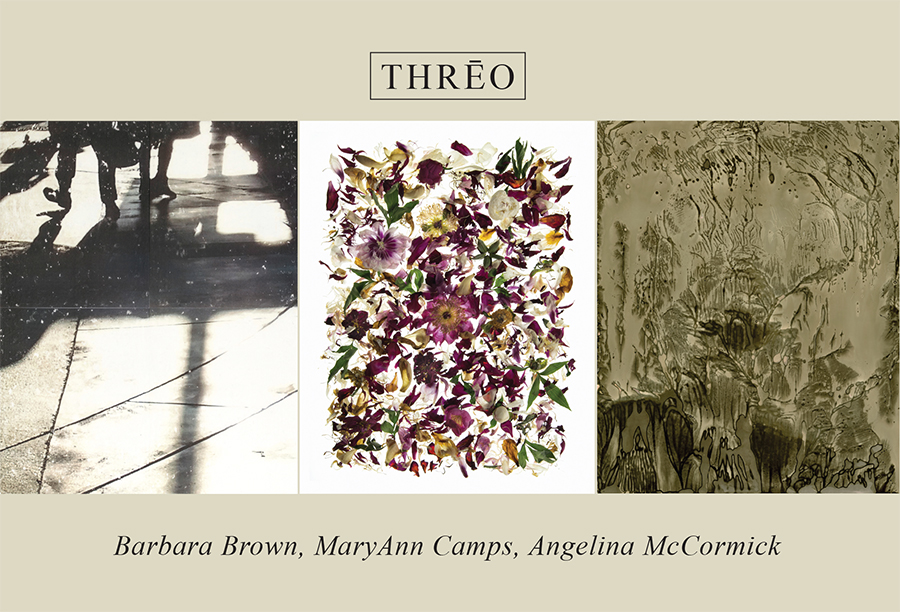
Very pleased to be exhibiting my work at Studio Sixty Six in Ottawa with MaryAnn Camps and Angelina MacCormick.
I look forward to greeting you at the opening on Friday June 14, 2019 from 6-9pm and at the Artist Reception and Social on Friday June 21st, 2019 from 5-7pm.
Vernissage: Thursday, November 8, 5:30 to 7:30 p.m. 2018
Death Café: Wednesday, November 21, 2018 at 5:00 to 7:45 p.m. and Sunday January 6th, 2019 at 3:30 p.m. in the gallery
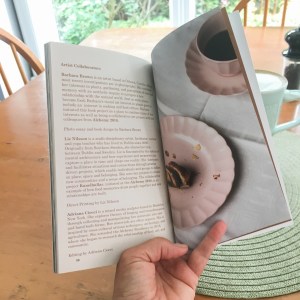
Death Café is an opportunity to talk about all aspects of death over a cup of tea, coffee and cake.
Artists’ tour and catalogue launch: Sunday, December 2, 2:00 p.m. 2018
Curatorial talk: Sunday, January 6, 2:00 p.m. 2019
Karsh-Masson Gallery Ottawa City Hall, 110 Laurier Avenue West
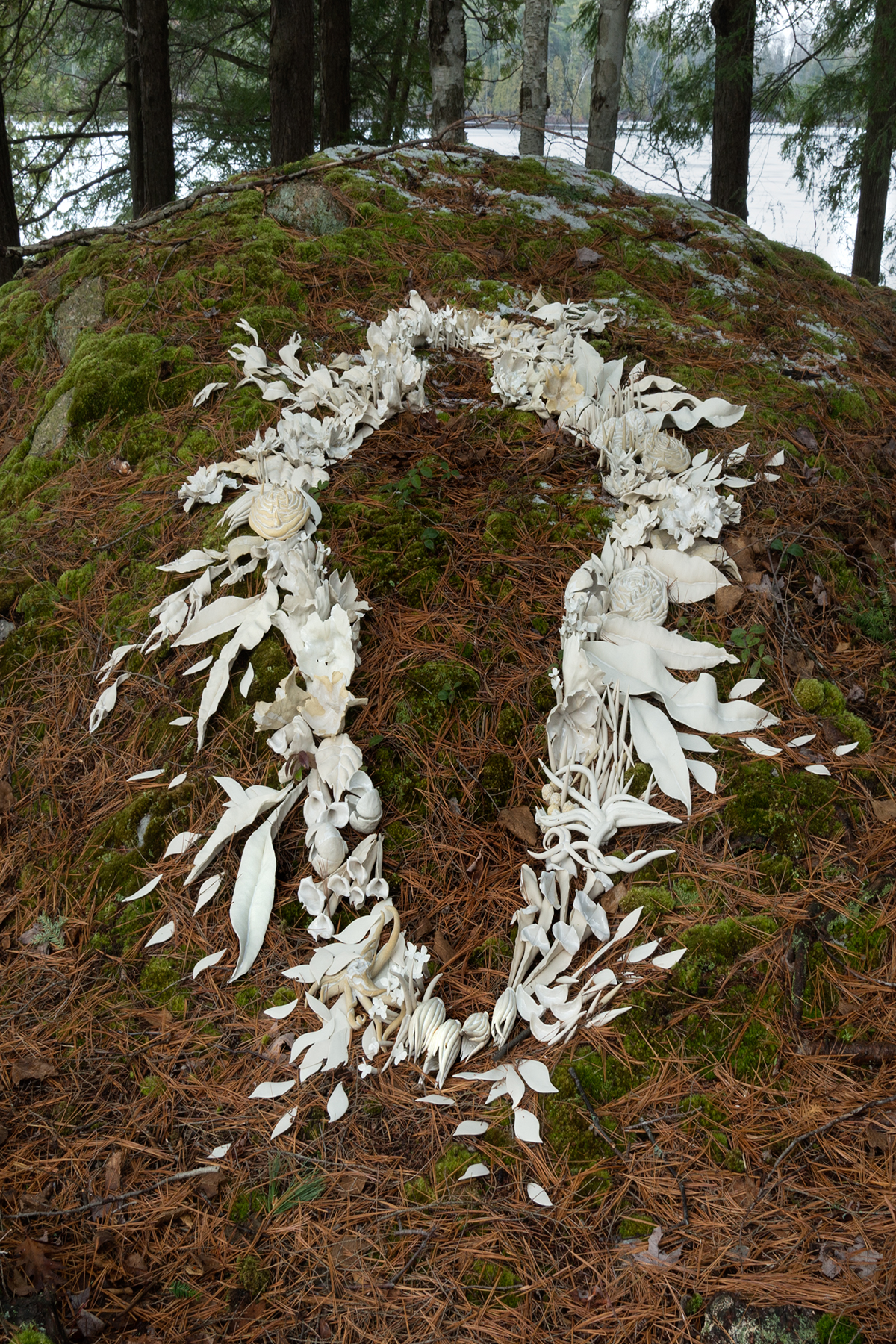
LifeCycle Conversations is inspired by the theme of memento mori – a reminder of human fragility, mortality and the inevitability of death. In traditional Western painting it is represented symbolically by flowers, fruit and other objects, but here memento mori has been transposed into immersive installations created collaboratively by Barbara Brown and Cynthia O’Brien.
This is the first time that Barbara Brown (photography) and Cynthia O’Brien (clay sculpture) have chosen to work in a collaborative manner – their new works are the fruit of their combined artistic vision. Though the artists work in different media, both employ the changing beauty and delicacy of plants and flowers as a commemorative act and as an observance of transience, loss, memory, decline and rejuvenation in all living things. Brown and O’Brien’s installations also reflect the emotional impact that working as artists in a long-term care residence, where they befriend individuals who are near the end of their lives, has had. Their work reveals profound insights gained from this experience.
– Excerpt from the essay by Judith Parker
Barbara Brown’s recent exhibitions include Red Oak Labyrinth, an outdoor installation in Beyond the Edge: Artists’ Gardens, Experimental Farm, Ottawa, 2014 (Canadensis Botanical Garden Society), and Desire for Acadia, a solo exhibition at David Kaye Gallery, Toronto, 2018 (Contact Photography Festival). Residencies include Kingsbrae International Residence for the Arts, Saint Andrews, NB, 2017; the Art Collaborative Residency, Jaipur, India, 2017; and Alchemy: An Artist-Led Residency, Hillier, ON, 2018. Recent grants include support from the Ontario Arts Council.
Cynthia O’Brien’s clay sculpture is collected by the Taipei County Yingge Ceramics Museum, Taiwan, the Canada Council Art Bank and the City of Ottawa. O’Brien’s recent grants include the Explore and Create Program, Canada Council for the Arts, 2018 and Arts Funding, City of Ottawa, 2015. Residencies include Tanks Arts Centre, Australia, 2012; Watershed, USA, 2013; Ayatana Artists’ Research Program and CPAWS-OV Dumoine River Art Camp, Quebec, 2017; and MASS MoCA, USA, 2018.
Judith Parker is a curator and art historian. Exhibitions include: co-curator, Beyond the Edge: Artists’ Gardens, Experimental Farm, Ottawa, 2014 (Canadensis Botanical Garden Society); two artist-in-residence exhibitions at the Bytown Museum, Michèle Provost – Rebranding Bytown, 2012, and Cindy Stelmackowich – Dearly Departed, 2011; and Freedom of Association: Dennis Tourbin and Other Artists, Ottawa Art Gallery, 2012. Residencies include Elsewhere – Living Museum, North Carolina, USA, 2014. The Ontario Arts Council has supported her work.
The artists gratefully acknowledge the financial support of the Ontario Arts Council.
KARSH-MASSON GALLERY Ottawa City Hall, 110 Laurier Avenue West
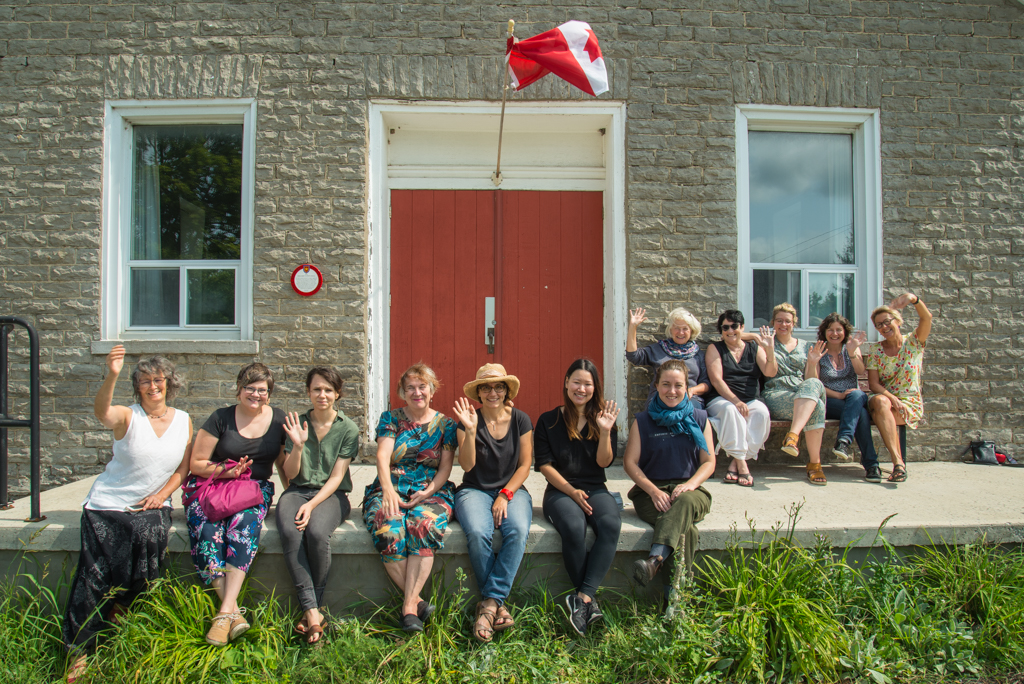
Alchemy 2018: A Recipe for an Artists Residency in Prince Edward County
Background:
Alchemy 2018 was a summer gathering of selected visual artists hosted by Claire M Tallarico and Tonia di Rico, set in the quiet rural community of Hillier in Prince Edward County, Ontario. In its 4th year, the artists’ residency is a mix of social experiment, communal cooking, studio practice and culinary exploration all wrapped up in rememberingand sharing family recipes and stories of those who made them.
Ingredients:
-12 Visual Artists from Canada and beyond (Korea, Ireland, Sweden and USA)
-Pecha Kucha – illustrated introductions by each participant
-10 days in full summer at the peak of the harvest season
-Rural setting with 3 residential houses in wine county
-Large Community Hall transformed into a temporary studio
-Well equipped community kitchen
-Communal dinners made from local produce
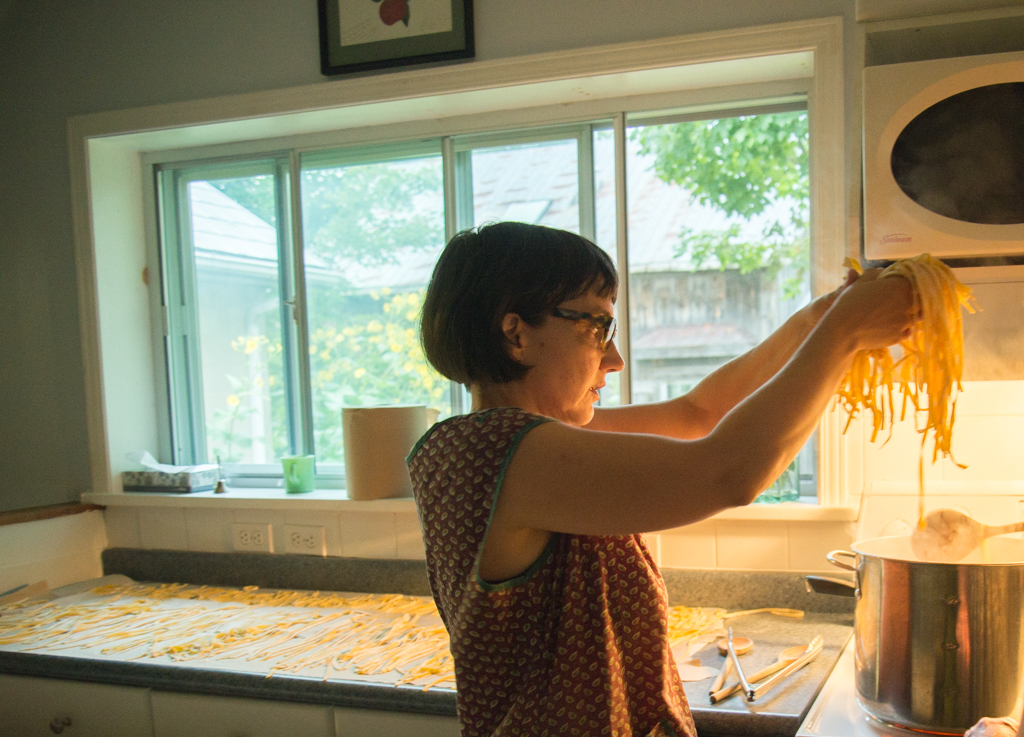
-Pasta making workshop and dinner
-Visits to local wine makers and organic gardens
-A beach picnic at sunset
Method:
Bringing together a group of strangers who have accepted to travel from near and far and hoping they will gel into a functional community in a 10 day period takes some tending and some time. This is what the hosts Claire and Tonia provided. They cared for all the logistical details and made introductions. Once settled in our houses and our communal studio, Claire and Tonia hosted a welcome dinner. Claire is a master chef and knows how to host a conversation that draws each person into the mix. Tonia has her eye on all the details and works to sort out the myriad issues and challenges that arise.
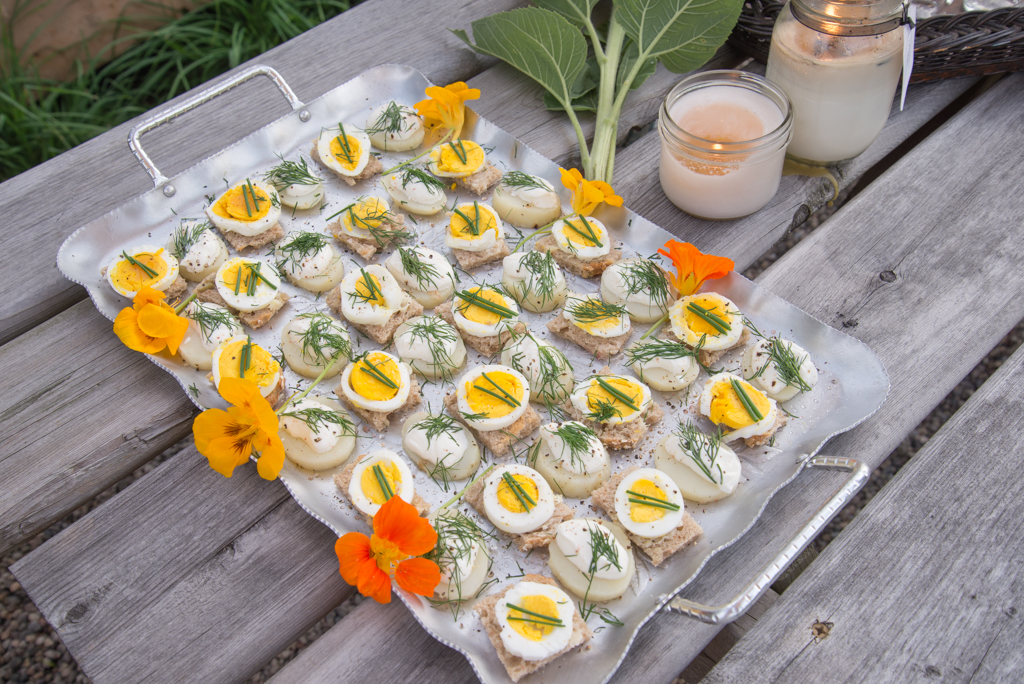
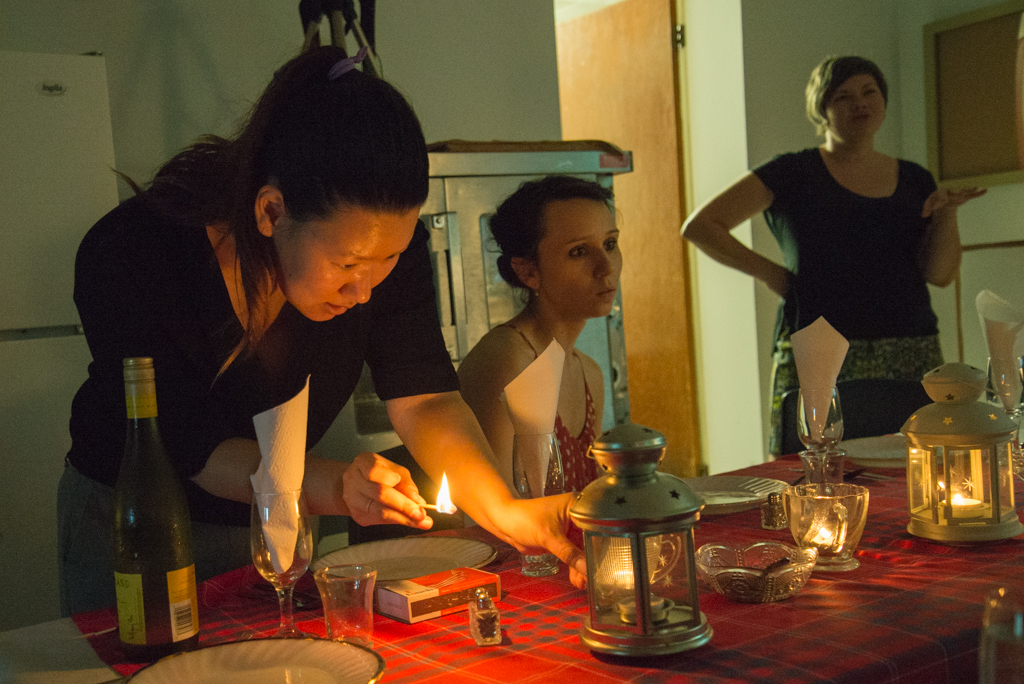
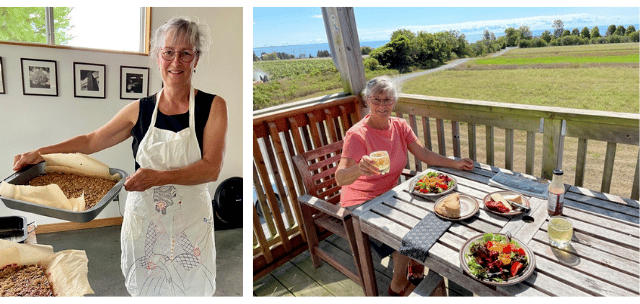
Each house was asked to host a dinner and also to contribute to pot-luck dinners during the week. The meals were occasions for house mates to work together to plan and shop then cook the meals. Attention to all the details including the story of the food was always apparent and as each meal was presented there was something of an unspoken competition arising between the houses. The table settings were always a sight for the eyes, the aroma from the kitchen was very fine and the conversation was woven between cooking and the practice of art making. This is the Alchemy of the residency!
Summary:
While the focus of the residency was on the gathering of community through the making and hosting of evening meals we also found time for yoga in the mornings, touring the local wineries and making art in-between.
My project was to make a recipe book of sorts from the experience of the residency. Initially I thought I would document each meal and the recipes and stories involved but soon realized that was far too ambitious. I settled on one recipe for Cinnamon Buns made jointly by Liz from Ireland who grew up in Sweden and Adrianna from NYC whose Swedish grandmother made a similar recipe. With the 200 or so images collected during the making of the Kunel Bullar (cinnamon buns) and the stories from each of us highlighting our memories and family traditions around this recipe, we three artists will collaborate over the internet to make an artist book which might be called “A Storied Recipe”. I look forward to continuing the spirit of the residency with this collaborative project. Stay tuned for news of the publishing date.
Very pleased to be exhibitingDesire for Arcadia with David Kaye Gallery, Toronto. The work is printed, framed and ready to go for an opening on May 3rd 2018. Stop by on Saturday May 5th for a reception when I will be in attendance.
Gratitude to the folks at the School of Photographic Arts Ottawa (SPAO) and especially Michael Tardioli for generous support and encouragement as I prepared the work for this exhibition.
Early morning at the entrance gate to Diggi Palace, Jaipur.
On the Creative Process and Project Development
I used to worry that I didn’t have any or enough ideas to work with. This feeling often arises at the moment when one is required to have an idea for a project. I realize that it’s not that I don’t have ideas, but that I am very harsh and reject most of the ideas that come to me. Over the years I have learned to stop and record any and all ideas when they arrive with me. Ideas can be very ephemeral! When an idea lands, it wants to be held close, to ferment and develop before being brought into the light for examination.
Kala Chaupal loosely means “art village, conversation or community.” The organizers set as the overall theme Water and concerns about water. I arrived in Jaipur with a general idea about how humans relate to water and wondered how we can enhance that relationship. I wanted to understand what happened to the water that flows from the faucets in my home that rendered it no longer sacred? But I had no idea how I was going to turn that noticing into a project.
Connecting the Various Bodies of my Artwork
Over the past several years my art-making has revolved around exploring and enhancing our human connection to nature. Raised in the modernist age of the machine, I was taught to see myself apart from nature and that we humans have dominion over nature. Now in a post-colonial time, I am learning that we are an integral part of the web of all life, made of the same molecular components as the world that surrounds us. We are nature! Through my art practice I explore this connection and relationship and find ways to amplify and personalize how I relate to the world around me.
How to Balance Socializing, Working, Site-Seeing and Learning?
In Jaipur we were a gathering of 43 artists from many countries along with a team of local student volunteers and a group of dedicated apprentices and organizers. There were a lot of people to get to know in a short time. Balancing all the competing interests and keeping the work on track is always a concern during a residency. It’s important to look around and discover the place where you find yourself and to some degree, let it influence you. A ten-day residency is a short time to develop, explore, execute and produce finished work for exhibition, especially photography. And so, there was a palpable sense of anxiety present among the artists.
Attending a colourful Diwali celebration at Diggi Palace with Daniel Sharp.
Each afternoon at 5pm we would gather in the great hall to hear lectures, presentations, and panel discussions. We had an opportunity to learn about local historic practices with water, and to see some of the work done by participating artists. It was also a time to catch up with each other and hear how work was progressing at the various sites as not all the artists were working on site.
-Talks by participating Artists.
-Film & Photo Essays on Water symbols and associations in Art
-Workshops & Displays by Artisans (Meena Art, Mandanas,)
-Panel Discussions by Art Historians & Experts
-Art for Healing- The Alchemy Vessel Project
-Music & Theatre performances
-Residency and Productivity report and updates
Traditional Rajasthan Water Pot Dance
Having all or most of your basic needs met and three meals a day laid out leaves quite a lot of time to work. It’s surprising how much you can accomplish when your internet connection is weak and you are given an assistant to work with. Working with another person required establishing some kind of schedule. In a way this helped me to stay on track. Before I knew it, I had developed and was working on 4 different and separate project ideas. Yikes…., that’s 2 or 3 ideas too many! It was important to make a start on all the ideas to see how they played out visually before deciding on the ultimate project. In fact, it was the reaction from others that helped me refine and choose which direction to pursue. When there are tears from viewers, you know you are on to something!
On Portraiture and Printing
The kind of relationship with water that I was seeking is an embodied one. It’s not formal, intellectual or academic. It’s visceral, tactile and personal. In Canada, we have learned of the North American First Nations understanding of women being water carriers as well as the female body being a carrier of water. In India, especially in rural settings, one sees women carrying large water pots on their heads and in their arms. These pots have a consistently round, big bellied shape. So, I went to the market to purchase a few. When I picked one up, I understood the correlation to the womb! This is not a symbol of a womb, it’s real, it’s a real live vessel for life! We contemporary Westerners know nothing of the tradition of women as water carriers. Our contemporary media continues to subjugate the function of the female body and sexualizes it for profit. The subject is loaded!
Traditional earthenware water pots in the market.
As I made my first test images, a series of portraits emerged. I have never been interested in portraiture and was surprised to find myself engaged in this age-old practice. It seemed to be the right answer to the question being posed and I was on the far side of the globe. Let’s remember I was in India! Sometime being out of your familiar setting gives licence to do things one might not do at home.
Young Rajasthan women engaged in the age old task or carrying water.
Once the idea fleshed itself out, (pardon the pun), the work just rolled along. When the first image was ready I was anxious to get established with a local photography printer. Jaipur does not have a professional printing service but it would take another week to find that out. The real challenge with photographic residencies is printing, and printing away from home and away from your usual support system. I had experienced the same issue this past summer on a residency in New Brunswick. The other two photographers in the group and I persevered and with the pressure of an upcoming exhibition we made the best of a poor situation. My final image arrived at the exhibition the day after it opened. Oh well, ……..no one died.
InSummary
It was a remarkable experience all around! I made many new friends; saw a slice of life on the other side of the world; produced new artwork; made developmental leaps that would not have happened at home; and took another step on the creative path as an artist. Now, where on earth will I exhibit this body of portraiture and the many accompanying images and stories? Maybe this project will turn into a book? In the meantime, I have two other projects to produce for exhibitions in Toronto and Ottawa in 2018, so you may not see this work for some time.
Miniature painting on silk by Sudarshan. Resident artist at Diggi Palace.